
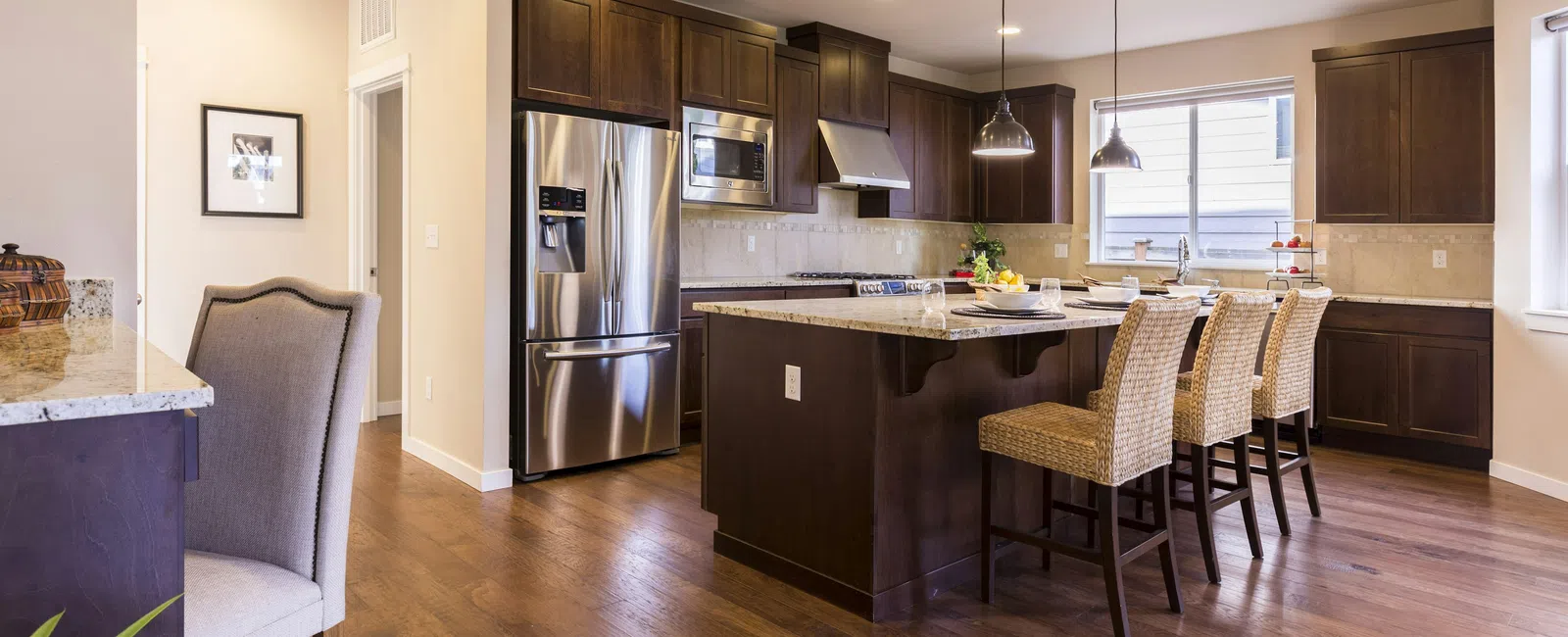
Solid hardwood can last 50 to 100 years or more, often outliving the house's original owners, because you can sand and refinish it several times over its life. Engineered hardwood typically lasts 20 to 40 years, and a version with a thick wear layer can last as long as solid because it can be refinished too.
Either way, hardwood is the one floor that gets restored rather than replaced, which is why it lasts longer than any other flooring you can buy. That fact alone makes its lifespan different from every other option.
Hardwood lifespan at a glance
| Type | Typical lifespan | Times it can be refinished |
|---|---|---|
| Solid hardwood | 50 to 100+ years | Several, commonly 4 to 10 depending on plank thickness |
| Engineered, thick wear layer (4 to 6 mm) | 40 to 80 years | Multiple; approaches solid |
| Engineered, mid wear layer (3 mm) | 20 to 40 years | 1 to 3 |
| Engineered, thin veneer (2 mm or less) | 15 to 30 years | Recoat only, no sanding |
Why hardwood outlasts every other floor
Every floor wears over time. What sets hardwood apart is what happens next. When luxury vinyl plank, laminate, or carpet wears out, you replace it. When hardwood wears out, it gets refinished: sanded back to raw wood and rebuilt with fresh stain and new protective coats. The floor that comes out the other side looks new, and on a first refinish there is no visible difference between a refinished floor and a brand-new installation.
That's why a hardwood floor can last for generations, while other floors are measured in a decade or two. A solid hardwood plank is thick enough to be sanded down several times across its life, and each refinish resets the clock. Other materials have real strengths in the rooms they suit, but hardwood is the only flooring that can be fully restored rather than swapped out, which is what gives it the longest lifespan on the market.
How long solid hardwood lasts
Solid hardwood is milled from a single piece of wood, typically about three-quarters of an inch thick. That thickness is a reserve of lifespan. Each refinish removes only about 1/32 of an inch, so a solid plank can be sanded and refinished several times, commonly cited as anywhere from four to ten depending on the board and how much is taken off each pass. Spread out over years, those refinishes can carry a floor through most of a century.
With reasonable care, a solid hardwood floor can last 50 to 100 years, and well-kept floors in older homes routinely pass the century mark. That is why solid hardwood is often described as lasting a lifetime. It genuinely can.
How long engineered hardwood lasts
Engineered hardwood is real wood on top, bonded over a stable plywood or HDF core. Because the surface is genuine hardwood, its lifespan comes down to one number: the thickness of that top wear layer, since that is what can be sanded.
A thick wear layer, around 4 to 6 mm, can be refinished multiple times and pushes an engineered floor's lifespan toward that of solid wood, often 40 to 80 years. A mid-range 3 mm wear layer can usually be refinished one to three times and lasts roughly 20 to 40 years. A thin veneer of 2 mm or less generally cannot be sanded at all; it can be screened and recoated to refresh the finish, but not fully refinished, which puts its life closer to 15 to 30 years. When you shop engineered, the wear layer spec determines how long the floor will serve you. Our guide to the differences between solid and engineered hardwood covers how to choose between them for your home.
Engineered wood's core also makes it more stable against humidity and slab moisture than solid wood, which matters in many Atlanta homes and is why it is often the right choice over a concrete slab.
What determines how long your floors last
Two hardwood floors installed in the same year can last decades longer or shorter, and a handful of factors explain the difference.
Plank and wear-layer thickness set the ceiling because they determine how many refinishes the floor can handle. Species hardness matters for how well the surface resists day-to-day dents, with harder woods like hickory and white oak holding up best in busy homes. The finish protects everything above the wood and is the first thing to wear, so recoating before it fails extends the life of the wood underneath. Installation quality decides whether the floor stays flat and tight over time. Humidity control also matters, since wide seasonal swings stress any wood floor.
Care is the part you control. Keeping grit swept up, wiping spills promptly, using felt pads, and managing indoor humidity all add years. Our do's and don'ts for caring for hardwood cover the routine that keeps a floor in refinishable shape for as long as possible.
Refinishing: the reset button that extends the life
Refinishing is what turns a worn floor back into a new-looking one, and knowing when to do it protects the wood you have. The signs are straightforward: a finish that has gone dull or gray, scratches that reach the wood, or areas worn along main walkways. Catching it at the finish stage, before wear reaches the wood, means a lighter sand and more refinishes left in the floor's future. Our guide on whether it is time to refinish your floors walks through the signs, and our hardwood refinishing FAQs answer the common questions about the process.
Done professionally, hardwood floor refinishing sands the floor to bare wood and rebuilds it with fresh stain and three coats of protective polyurethane, a full restoration rather than a coat brushed over the old finish. A few damaged boards can be swapped in and blended during the process, so a scratched or stained section rarely means replacing the whole floor.
Do hardwood floors add value if they last that long?
Longevity is a large part of why hardwood adds more resale value than any other floor. Buyers pay for a floor that can be refinished to look new decades from now, and the National Association of Realtors puts the return on hardwood at roughly 118%, the highest of any flooring. A refinished hardwood floor is also one of the highest-return improvements a homeowner can make before listing. Our article on how hardwood adds value to your home goes deeper on the resale case.
An Atlanta note
Atlanta's humidity and the slab foundations common in newer north-metro construction both shape how long a wood floor lasts here. Engineered hardwood's stable core handles slab moisture and seasonal humidity better than solid wood, which is why we often recommend it over concrete, while solid hardwood remains a century-long floor in the many Atlanta homes with wood subfloors. Matching the right build to your home is a large part of what makes a floor last, and it is the first thing your Project Manager sorts out on a visit.
Get floors built to last in your home
How long your floors last starts with choosing the right product for your home: solid or engineered, the right wear layer, the right species for your traffic, and an installation that keeps the floor flat and tight for decades.
A dedicated Project Manager comes to your home, reviews your subfloor and how you use your rooms, and brings curated samples of the solid and engineered hardwood we install, matched to how long you want them to last and where they are going. If you already have hardwood that has lost its luster, we can tell you whether refinishing will restore it. You get a written estimate within 24 hours, and every installation is backed by our Lifetime Installation Warranty. We have installed and restored hardwood across North Atlanta since 2001.
Schedule your free in-home consultation, and we will help you choose floors built to last as long as your home does.