
Hardwood Floor Refinishing in Atlanta, GA
Making Your Floors Look
Brand New Again
Your floors have more life in them. A Concept Flooring Project Manager comes to your home, walks the space with you, and shows you exactly what is possible.

Hardwood Floor Refinishing vs. Replacement
Why replace floors that can be restored?
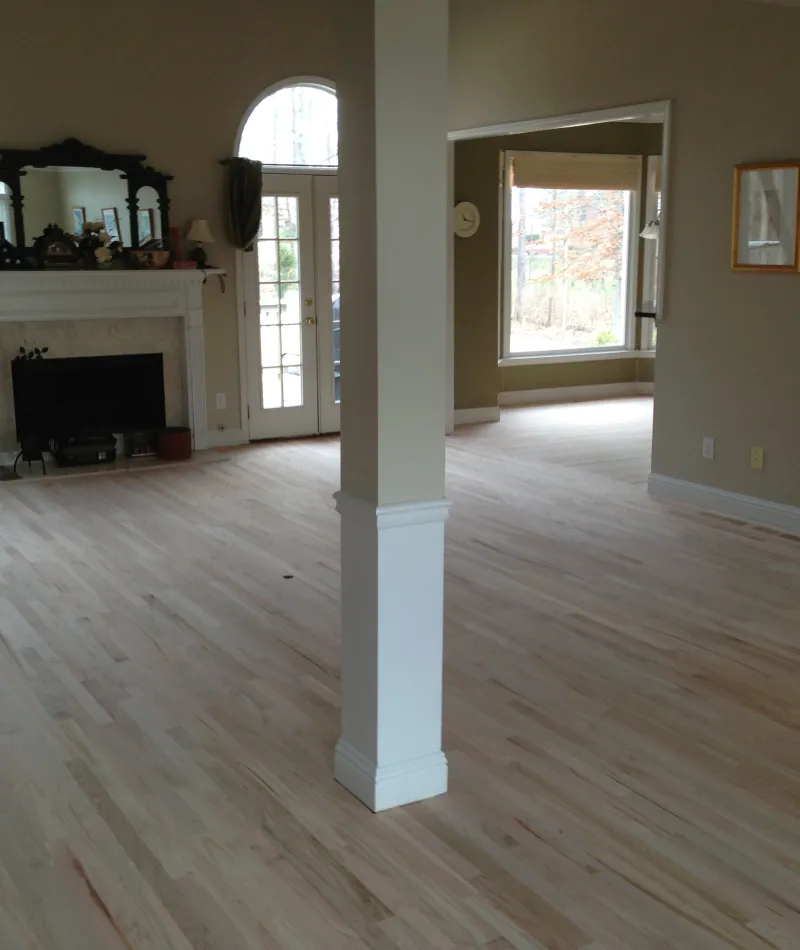
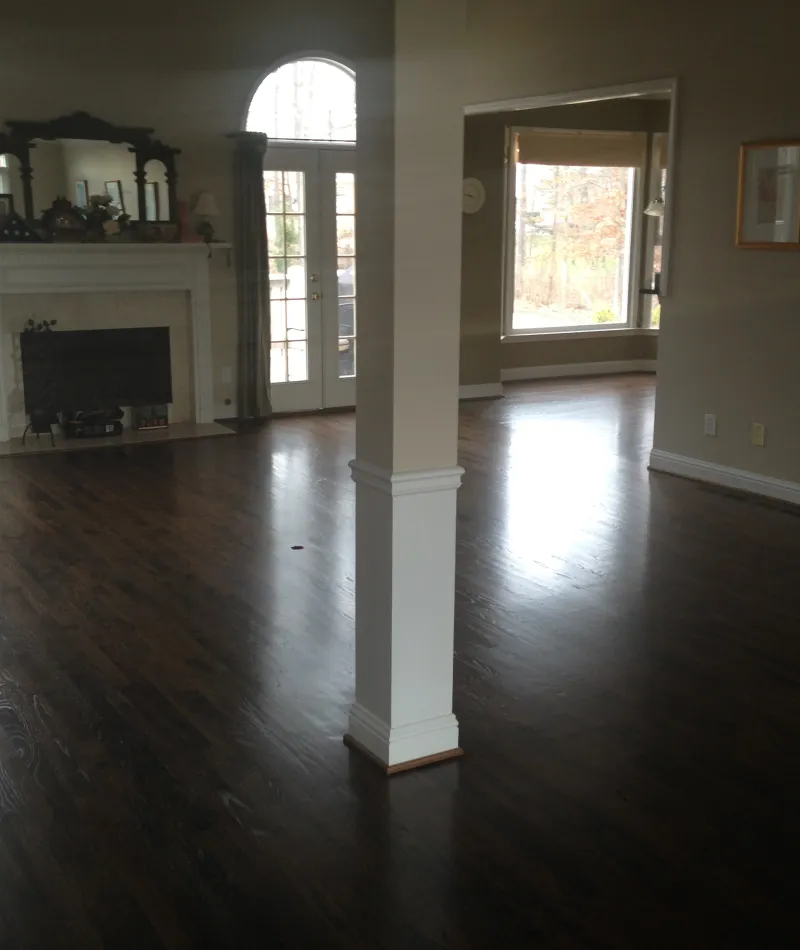
If you have solid hardwood floors, refinishing them is almost always the smarter financial decision. You are not just saving money. You are getting a like-new floor without paying for new flooring, because the end product looks the same. A refinished solid hardwood floor looks like new floors. There is no visible difference between a great refinish and a new site-finished installation, especially on the first refinish.
Replacing hardwood floors means paying to demo what you have, buy new wood, install it, and then pay to finish it. Refinishing means paying to sand what you have down to raw wood and finishing it from scratch. You get a like-new floor without paying for new flooring.
Solid hardwood is also the only flooring product that can be fully restored. LVP, laminate, and carpet cannot be refinished. When they wear out, they get replaced. A solid hardwood floor can be sanded and refinished multiple times over its life.
If you have a few damaged boards, that does not necessarily mean you need to replace them. When boards are swapped out during a full refinish, everything is sanded and stained together at the same time. The result blends so completely that you would have a hard time identifying where the new boards end and the old ones begin.
What Hardwood Floor Refinishing Actually Involves
Hardwood floor refinishing sands your existing floors down to raw wood, then rebuilds them with fresh stain and three coats of protective polyurethane. It's a complete restoration, not a quick coat applied over the old finish.
Is Hardwood Floor Refinishing Messy or Disruptive?
Here's What to Expect
Hardwood floor refinishing is less disruptive than most homeowners expect. There's some dust, and you'll be off the floors for a few days, but with the right prep and equipment, most families are only out of the home for a few days through the project. Here's the honest version of the three things people worry about:
- The furniture. Your Project Manager helps move furniture into rooms that aren't being refinished, or into the garage; they're good at fitting more in a garage than you'd think. Anything fragile or irreplaceable, you set aside and keep in your own hands.
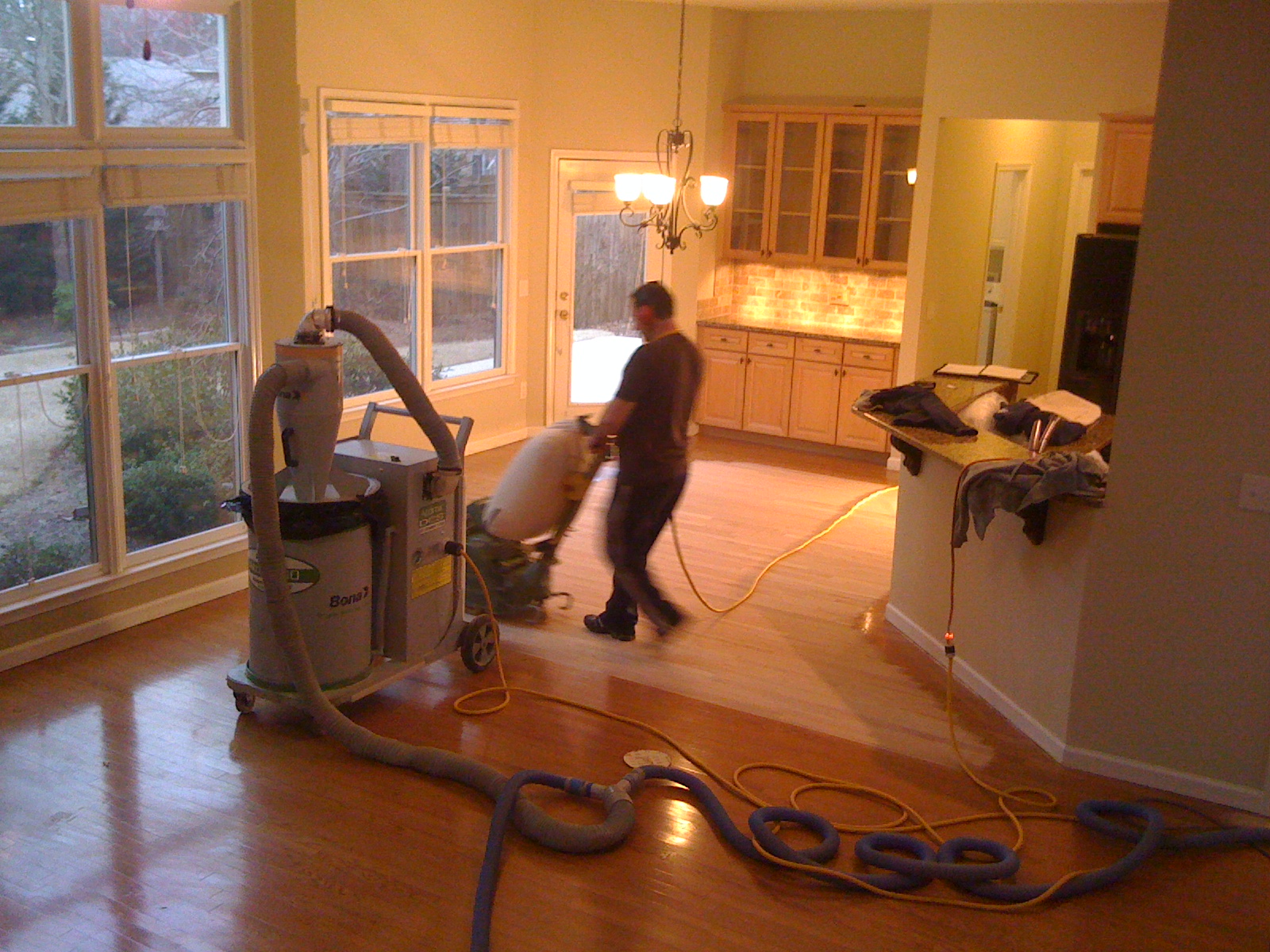
- The dust. Our sanding equipment captures most of the dust at the source, and we seal off adjacent rooms with plastic sheeting. You'll see a light settling of fine dust that a damp cloth handles in minutes, less than a typical drywall or paint job.
- Being off the floors. You stay off the floors while the stain dries and each coat of polyurethane cures. The finish smell fades as it hardens; opening a few windows speeds it along, and most homeowners find it's largely cleared within a day or two.
A few days of disruption for years of floors you love, and your Project Manager plans the whole thing around your schedule before any sanding starts.
- Reduced post-project cleaning, most homeowners need 30–60 minutes, not days
- Safer for homeowners with allergies, asthma, or respiratory sensitivity
- Protects HVAC systems from dust contamination
- Makes occupied refinishing realistic for most Atlanta households
Why Atlanta Homeowners Choose Concept for Wood Floor Refinishing
Why Atlanta Homeowners Choose Concept Flooring

Concept Flooring refinishes hardwood floors in lived-in Atlanta homes every single week. Not new construction. Not vacant properties. Homes with furniture that's been in the same spot for twenty years, with dogs, kids, and a lifetime of belongings.
That experience shapes everything about how we approach a refinishing project. Our Project Managers have guided thousands of Atlanta homeowners from the first call to the moment they walked back in on finished floors, and they know how to make the process work around your life, not the other way around.

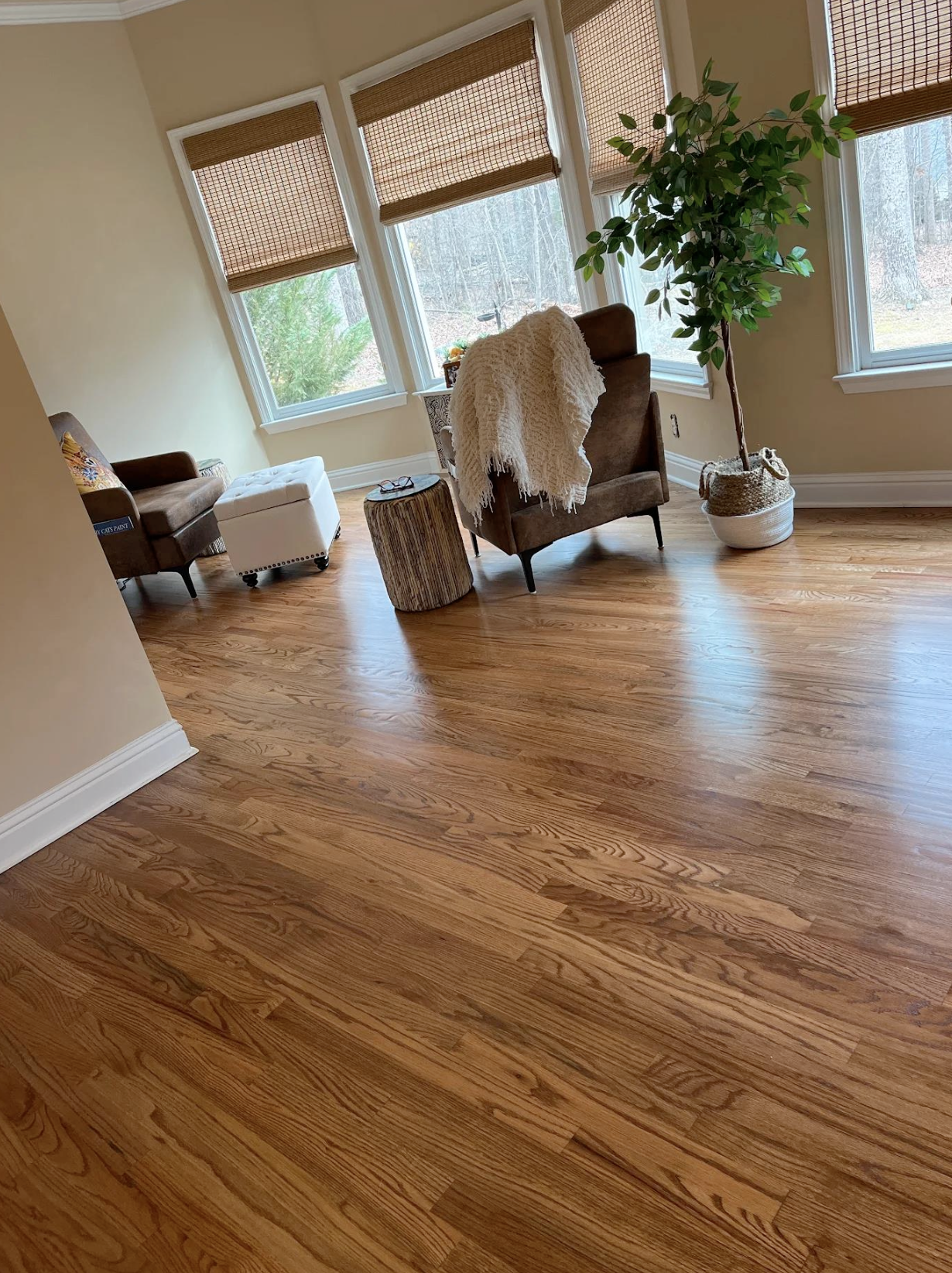
1,100 sq ft solid oak hardwood refinished - furniture moved and replaced
Full refinish of solid oak hardwood floors. Furniture moved throughout, floors sanded and refinished, then everything replaced in place.
"You guys did a great job. Our hardwood floors are beautiful. Thank you for your professionalism and super efficient work."
Verified Google Review
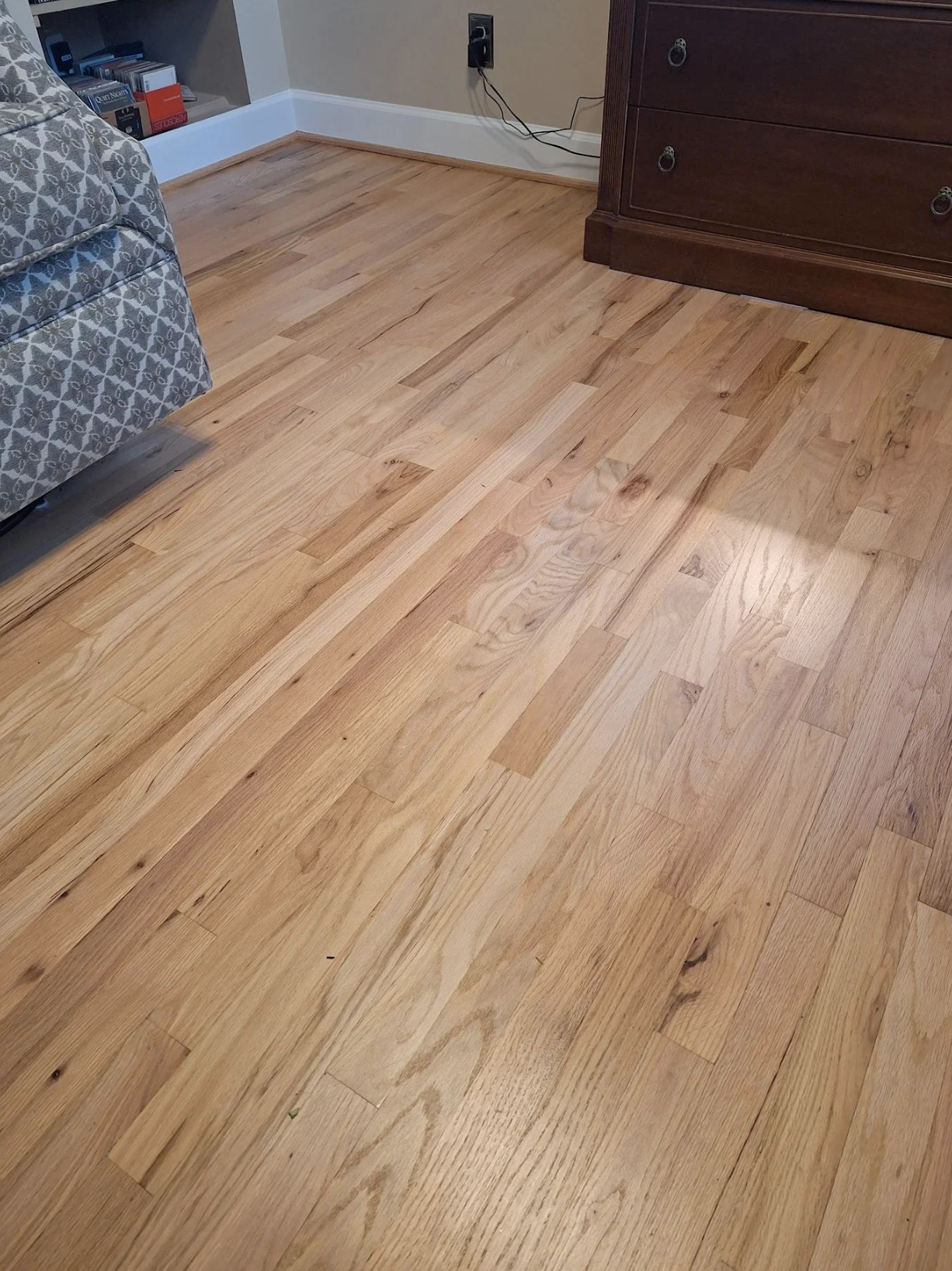
326 sq ft refinished to natural plus 14 stair treads - water-based satin polyurethane
25-year-old red oak floors and 14 stair treads refinished over 3 days. Changed from a darker stain to a natural finish with water-based satin polyurethane. Furniture moved throughout.
"Concept Flooring refinished my hardwood floors recently. I chose natural with satin finish, 3 coats. They look so nice. Chris is personable and explained the process well."
Verified Google Review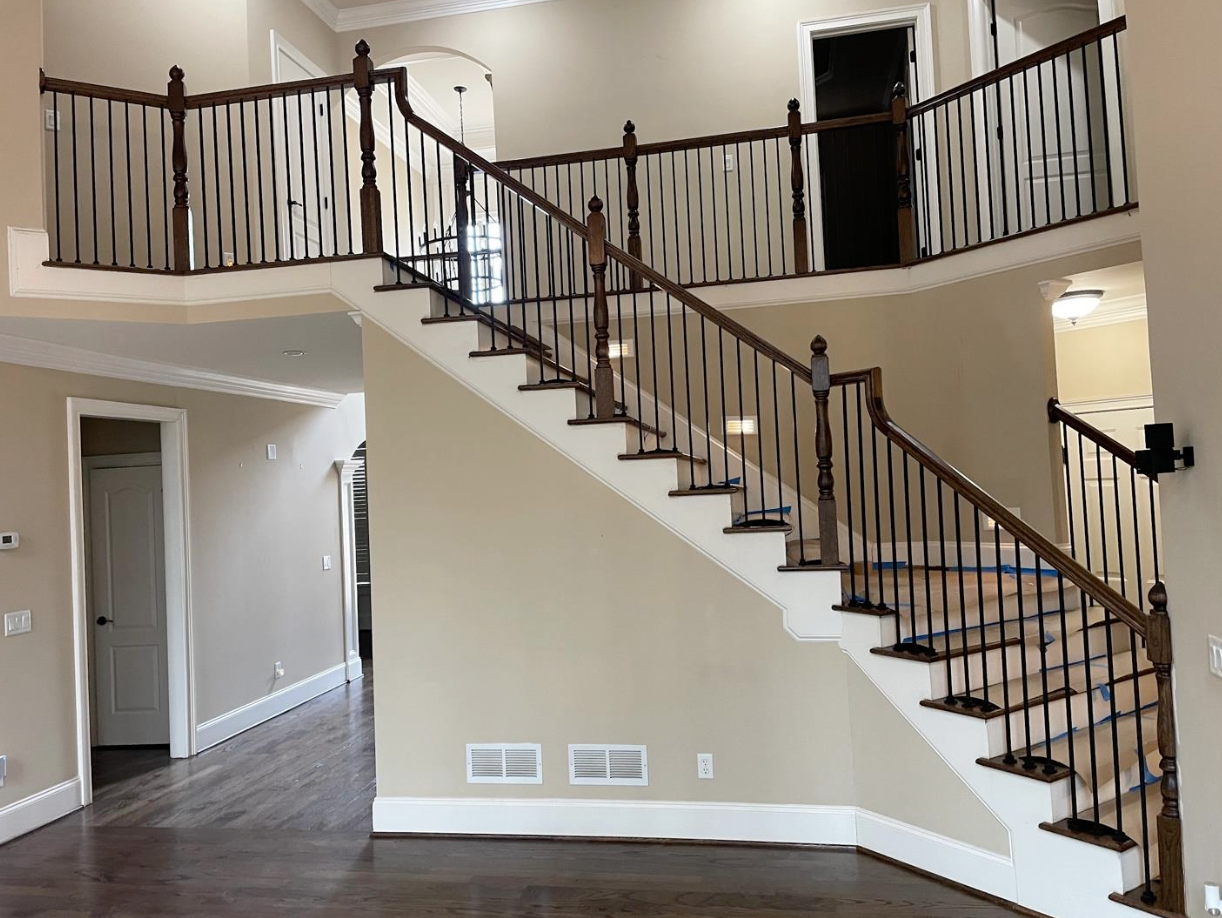
1,400 sq ft refinished dark brown satin + full staircase + new black wrought iron balusters
Converted existing hardwood to dark brown stain with satin finish. Refinished staircase including handrails, posts, and 15 treads. Removed white wooden spindles and installed new black wrought iron balusters.
"Project Manager Chris Baker and his team were excellent. He kept in contact when needed and was extremely helpful throughout the entire process. He told me exactly what to expect and the entire project was seamless."
Verified Google Review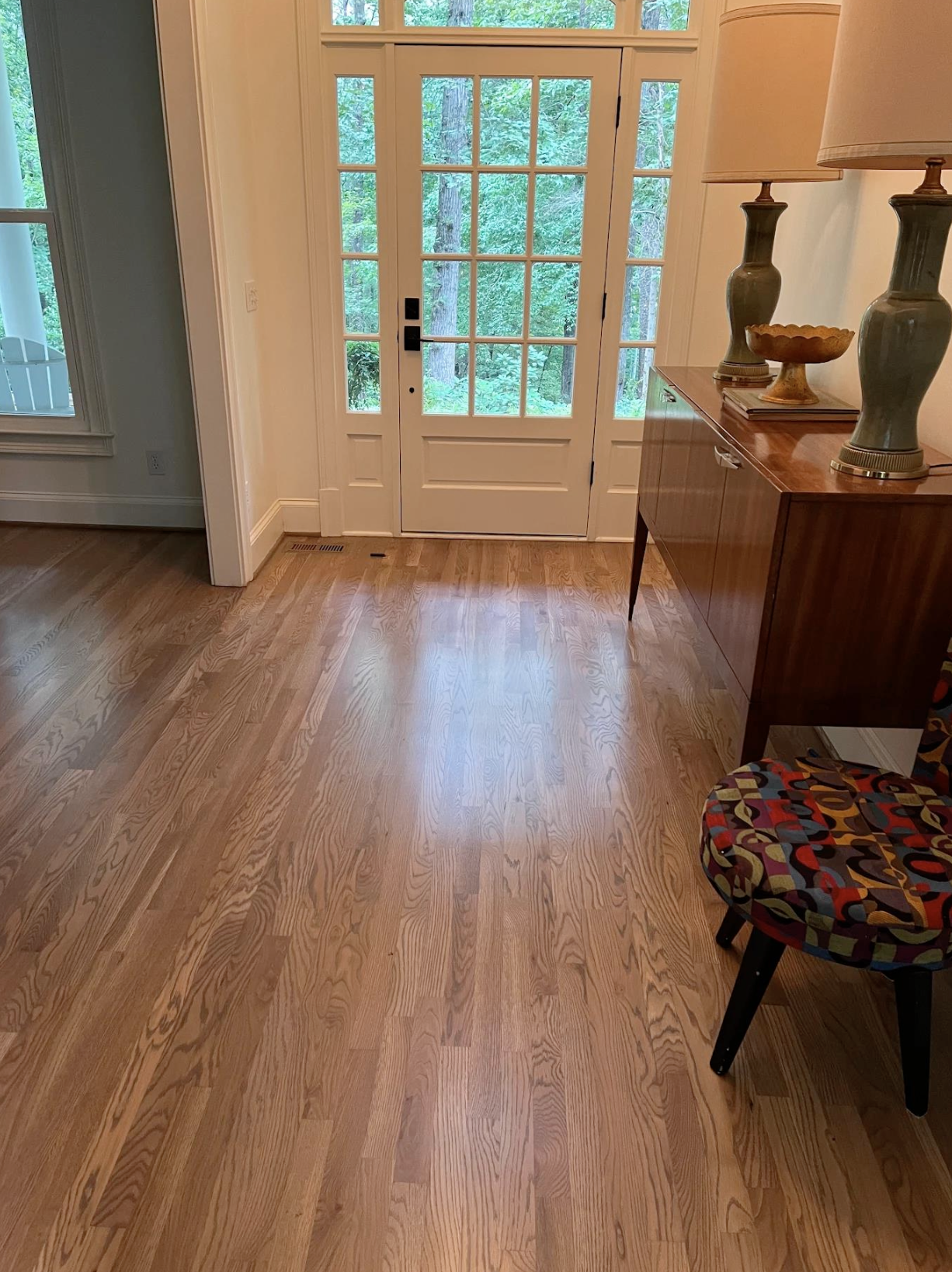
1,154 sq ft new site-finished White Oak + 600 sq ft refinished existing - gapped and damaged floors restored
Replaced a large damaged section, added new White Oak throughout the main level and upper hallway, refinished existing 600 sq ft simultaneously. Light brown stain with water-based polyurethane.
"We had a great experience. Bobby did an outstanding job on the floors. After a nightmare with other contractors, the Concept Flooring crew was professional, the floors were excellent quality, and the whole experience was very positive."
Verified Google Review
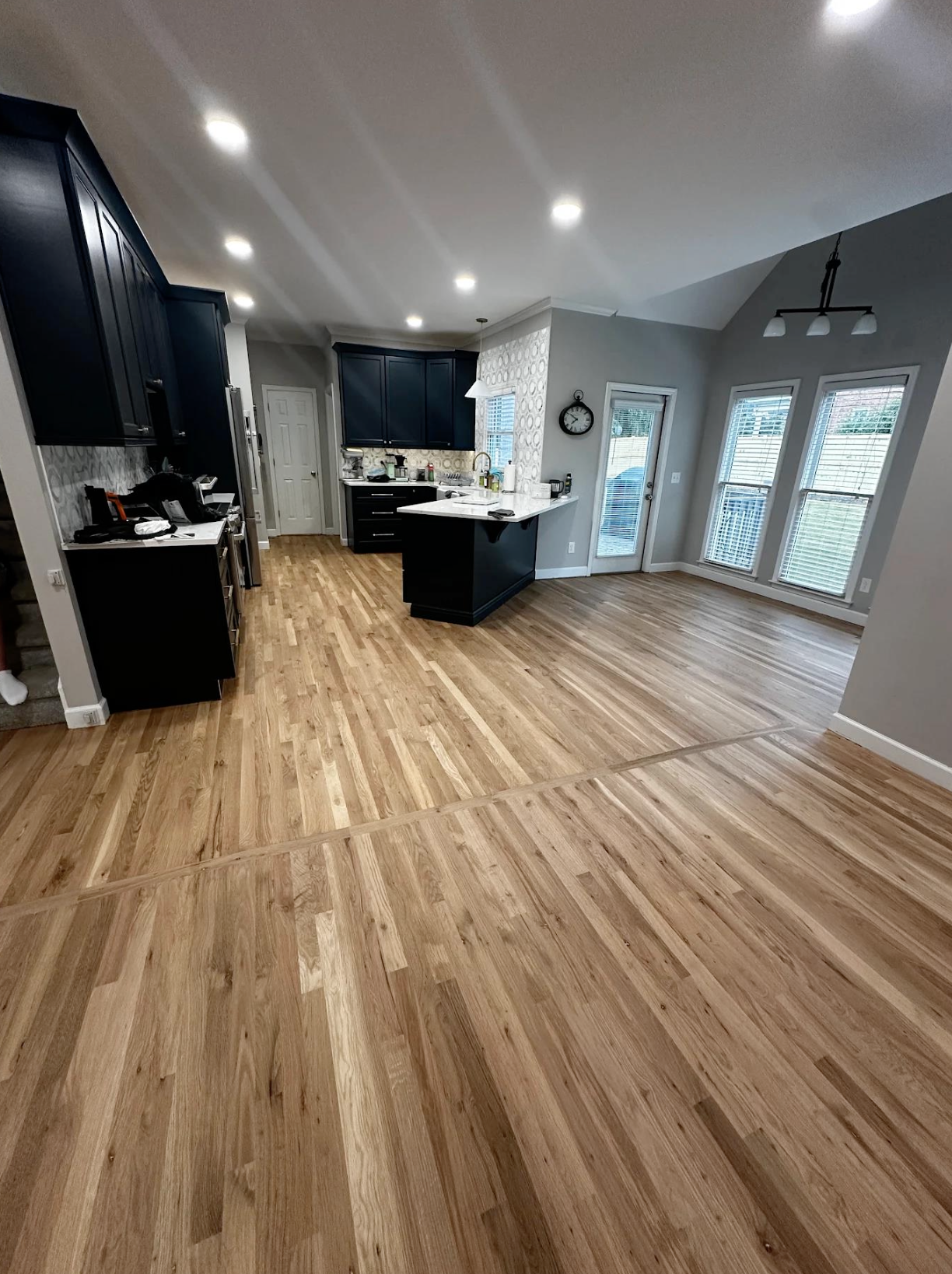
234 sq ft new White Oak + 975 sq ft main level refinished - stair handrails included
Removed carpet in the living room, installed new solid White Oak with a border matched to surrounding hardwood. Refinished the entire main level and staircase handrails. Furniture moved throughout.
"Jim and his team sanded and re-stained our original hardwood floors and added wood where the living room carpet was. It blended seamlessly. The floors turned out better than I could have ever imagined."
Verified Google Review
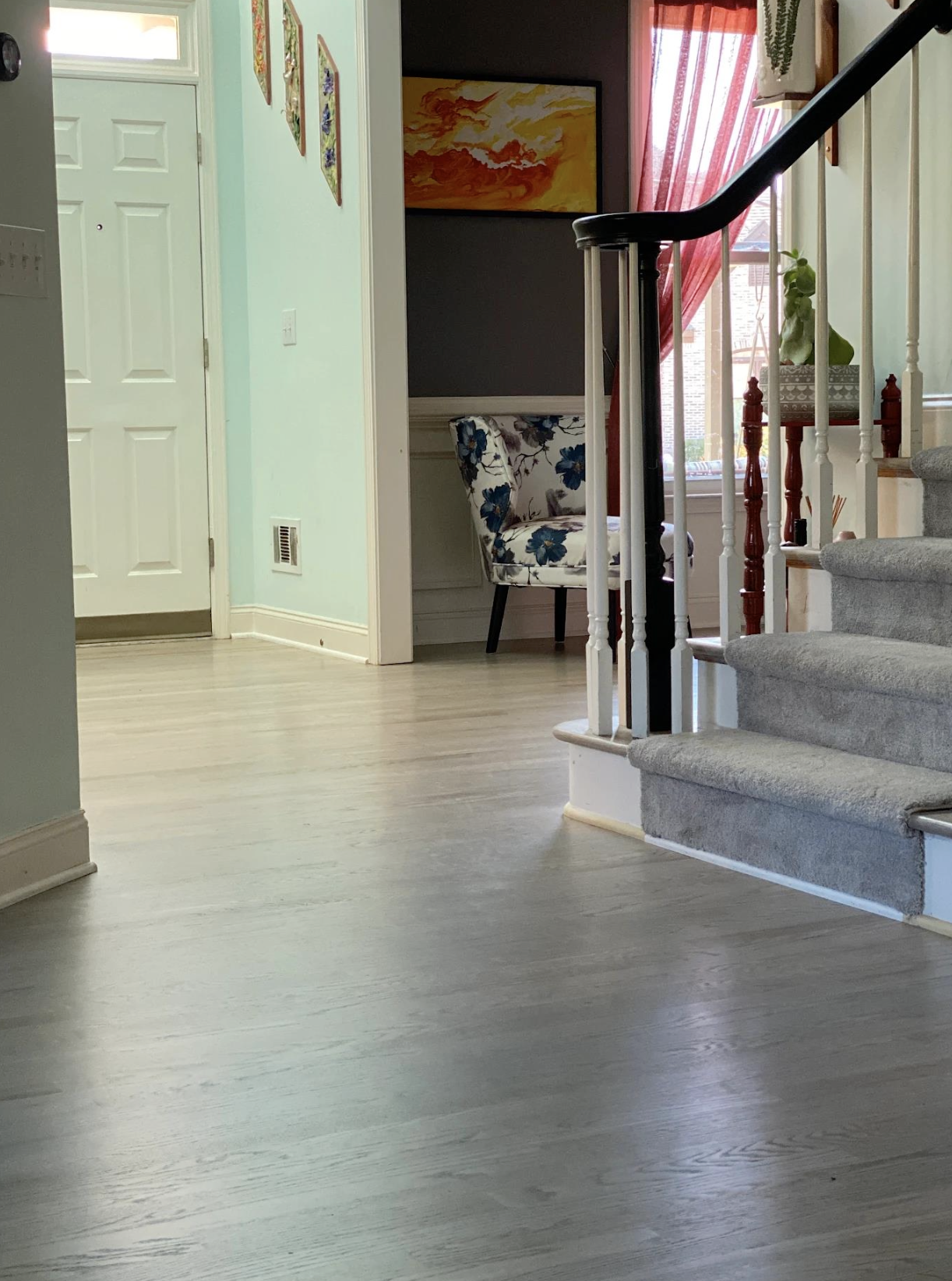
660 sq ft new Red Oak + 550 sq ft refinished existing - custom grey stain, stair treads matched
Converted carpet areas to new Red Oak, refinished existing floors simultaneously. Customer selected a new grey stain applied across all floors with 3 coats of polyurethane. Stair treads refinished to match.
"I wanted grey floors but have red oak - they did an excellent job, we love the color. Jim also organized a painter for the railings. The customer service is amazing, very responsive, explained the process, and made recommendations."
Verified Google Review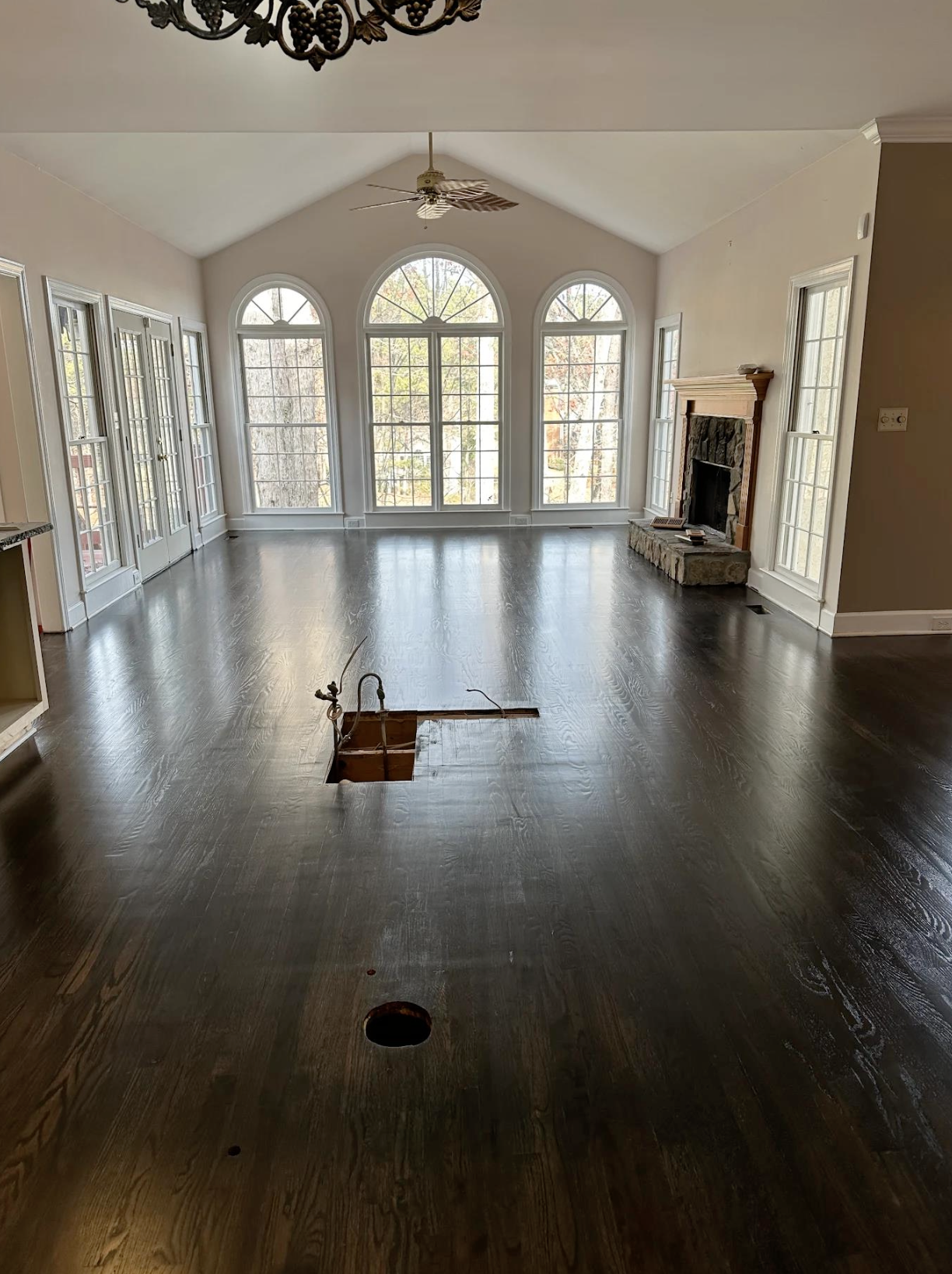
Kitchen remodel hardwood patch and full refinish - blended throughout
A long kitchen remodel required patching hardwood at multiple stages. Worked through every change and found solutions at each roadblock. Final refinish blended all areas into one cohesive floor.
"This was a long project with lots of issues and constant changes. Concept worked with me on every change and found solutions every time we ran into a roadblock. Professional, amazing work, extremely reasonably priced."
Verified Google Review
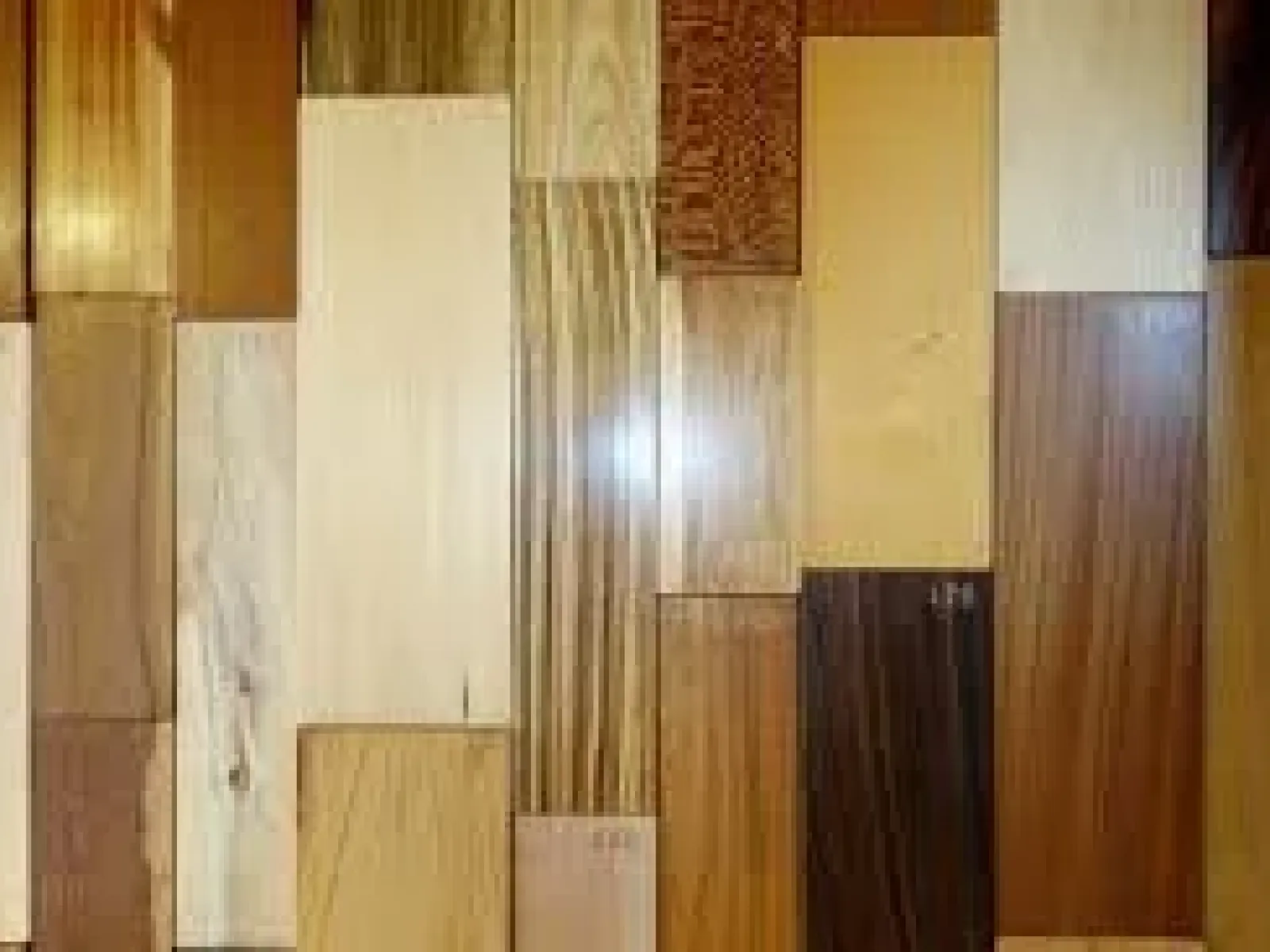
Floors you have been tolerating. Transformed into floors you love
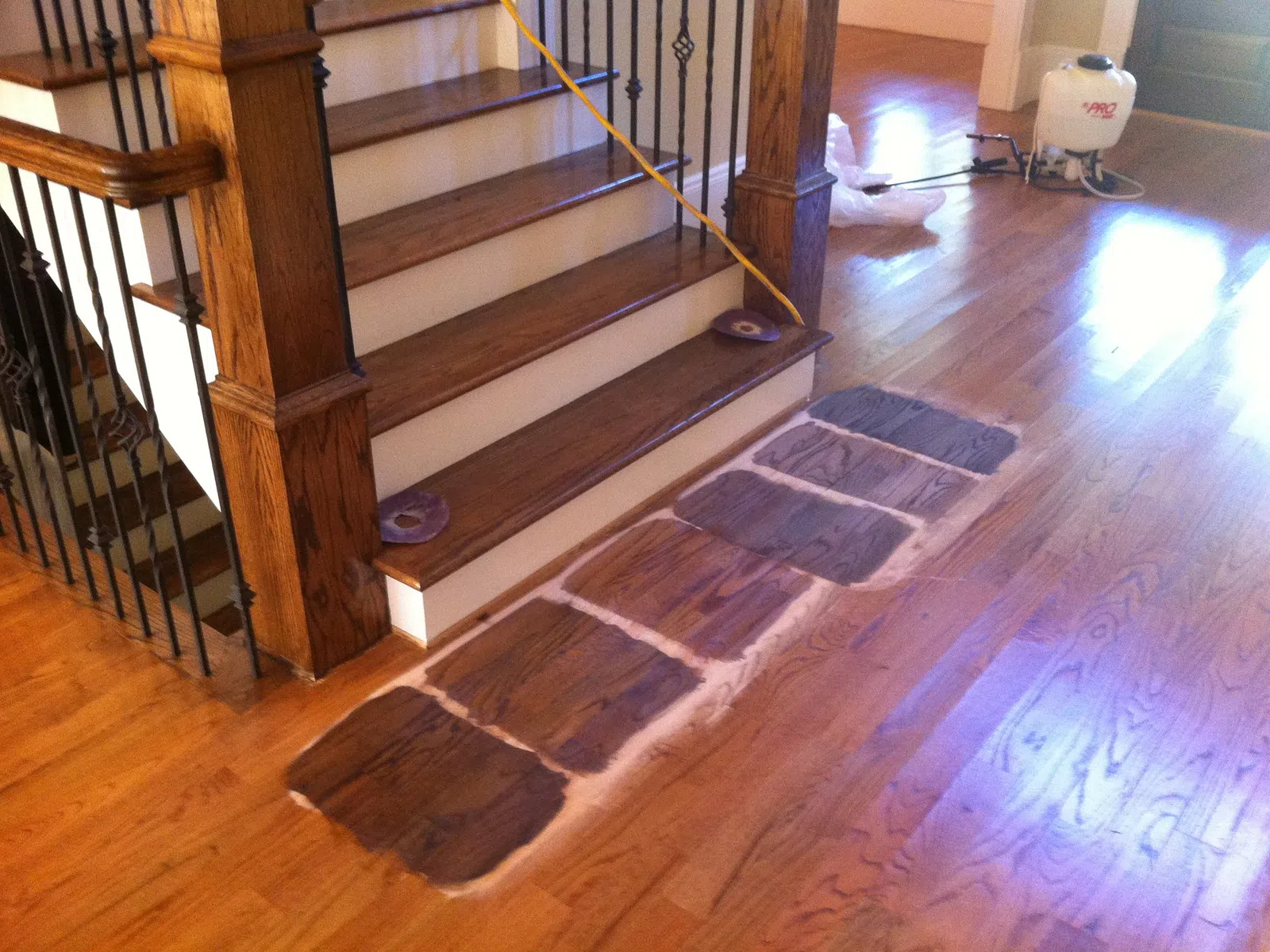
Some homeowners are restoring worn floors to the color they always loved, and their homes feel clean and cared for again. Others are changing color entirely: orange butterscotch going to deep brown, light natural going to a cool gray-brown, a color they've lived with for fifteen years, replaced with one they actually chose. The impact of a dramatic color change across a whole main level is something most people don't fully see coming until they walk through the door.
On the first day of refinishing, as we begin removing the old finish, your crew can apply stain samples directly on your floor, so you see the color in your actual space, in your light, next to your cabinets and trim. Refinishing also extends to your staircase; treads, handrails, and posts can often be refinished to match.
Ready to talk about refinishing your hardwood flooring?
Get started
A Project Manager will reach out within one business day. Prefer to talk now? Call directly.
Atlanta Hardwood Floor Refinishing Questions Homeowners Ask
If something is on your mind, it is probably on this list. If not, call us.
How do I know if my hardwood floors can be refinished?
Hardwood floors can be refinished if they are solid wood and have enough thickness remaining to withstand sanding. The easiest way to check at home is to pull up an HVAC floor vent and look at the side of a board. Solid hardwood is typically 3/4 inch thick. If the edge looks close to an inch, you almost certainly have solid hardwood. Your Project Manager takes a look during the consultation and tells you exactly what you are working with.
How long does hardwood floor refinishing take?
Hardwood floor refinishing typically runs several days from the first sanding to the final coat. Square footage, type of polyurethane, humidity, and other variables all play a role. Your Project Manager works with you to build a realistic timeline based on experience with similar projects, with built-in flexibility because every floor has its own surprises. The goal is a plan that works around your life while giving the floors the time they need to be done right.
How disruptive is hardwood floor refinishing? Will my house be a mess?
Refinishing is disruptive, but less than most homeowners expect. With dust-controlled equipment, 95%+ of the sanding dust is captured at the source, and what settles is typically a fine layer easily cleaned with a damp cloth. Furniture moves to rooms not being refinished or to your garage. You'll be off the floors during sanding, staining, and finish curing, typically 3-7 days depending on the scope. The disruption is real and concentrated; the mess is much less than the horror stories suggest. Your Project Manager walks through what to expect for your specific project before work starts.
Is dustless hardwood floor refinishing actually dustless?
Modern sanding equipment uses vacuum systems that capture most of the dust at the source, which is what "dustless" refinishing actually refers to. No refinishing process is literally 100% dust-free, and honest companies acknowledge that. What "dustless" realistically means is that vacuum-equipped sanding equipment captures 95%+ of the dust at the source instead of releasing it into your home. The practical difference: instead of needing to deep-clean your entire home for days after a refinish, most homeowners only need a damp cloth on flat surfaces and a vacuum on soft furnishings, typically 30-60 minutes of post-project cleaning. We use dust-controlled equipment on every project, not as a premium upcharge.
Can I change the color of my hardwood floors when I refinish them?
Yes, but only with a full sanding. To change the color of your floors, the existing stain and finish have to be sanded down to raw wood, then a new stain color can be applied before new protective polyurethane finish coats go on. Since the full refinish sanding process takes the floors back down raw wood, almost any stain color is available to you, from lighter and more natural tones to deep browns, cool gray-browns, and everything in between. On the first day of the refinishing process, as we begin removing the old finish and stain, we can apply stain color samples directly on your floor for you to see in your actual space, in your light, next to your cabinets and trim. Your Project Manager can help guide you through this process. You can also use the Roomvo visualizer tool on our website, where you can upload a photo of your room and see how different hardwood colors might look before the project even starts.
Can engineered hardwood floors be refinished?
Sometimes. It depends on the thickness of the wood veneer on top of the engineered core. A high-quality engineered hardwood with a thick wear layer (4mm or more) can typically be refinished once, sometimes twice. Thinner-veneered engineered hardwood usually cannot. The easiest way to know what you have is for a Project Manager to look at the floor in person — we can tell from a few details whether refinishing is on the table for your specific floor or whether replacement is the smarter call.
How much does hardwood floor refinishing cost in Atlanta?
Refinishing costs vary by the level of refinishing your floors need, the square footage, the species and condition of your existing hardwood, and any color changes or repair work involved. Every project is different, and there is no one-size-fits-all solution. Refinishing is almost always 50-70% less expensive than replacing your hardwood floors with a comparable new product, which is part of why the National Association of Realtors reports refinishing as the highest-ROI interior remodeling project at 147%. We provide written quotes after an in-home walkthrough, never over the phone, because phone quotes can't account for the variables that actually affect the price.
How do I protect my floors after refinishing?
Properly caring for refinished hardwood floors protects your investment for years. Felt pads under chairs and furniture. Area rugs, walk-off mats, and runners protect the finish from daily wear, but the wrong rug pad will damage it. Dog nails, high-heeled shoes, rotating vacuum beater bars, and wet mopping will damage the finish. The right cleaning products and a touch-up pen in your stain color are worth having on hand.
While the finish cures over the first several weeks, take a little extra care. The floor is walkable but still hardening underneath. Hold off on area rugs for two to four weeks. When they do go down, make sure the pad underneath is felt, not rubber. Rubber rug pads can bond to polyurethane, damaging the finish, whether the floors are brand new or several years old.
Use cleaning products made specifically for finished hardwood floors. Some common household cleaners leave residue that dulls the finish over time and affects how future coats bond. If you are not sure what to use, give us a call, and we will point you in the right direction.
For minor scratches, touch-up pens in a range of stain colors are available at most paint stores and online. They handle small marks between refinishing cycles.
When vacuuming, use a setting without a rotating beater bar. Those can scratch the finish over time.
Polyurethane continues to cure for several weeks after the final coat. Oil-based finishes typically take around 30 days to fully harden. Water-based finishes generally cure faster. Area rugs should stay off for two to four weeks to give the finish time to fully set. If you have questions about your specific project, your Project Manager is always a call away.
How often should you refinish hardwood floors?
Most well-maintained Atlanta hardwood floors need a full refinish every 10-15 years. High-traffic homes with kids, dogs, or open-concept layouts may need refinishing more frequently. Sun-exposed areas, kitchens, and entryways typically wear through the finish faster than bedrooms or formal rooms. The honest answer for your specific home depends on how you live and where the wear is showing. You can extend the life of your floors by using cleaners compatible with modern polyurethane finishes and never wet-mopping your floors.
What Atlanta homeowners say after their floors are refinished.
Real Google reviews from real Concept Flooring customers across north Atlanta.