
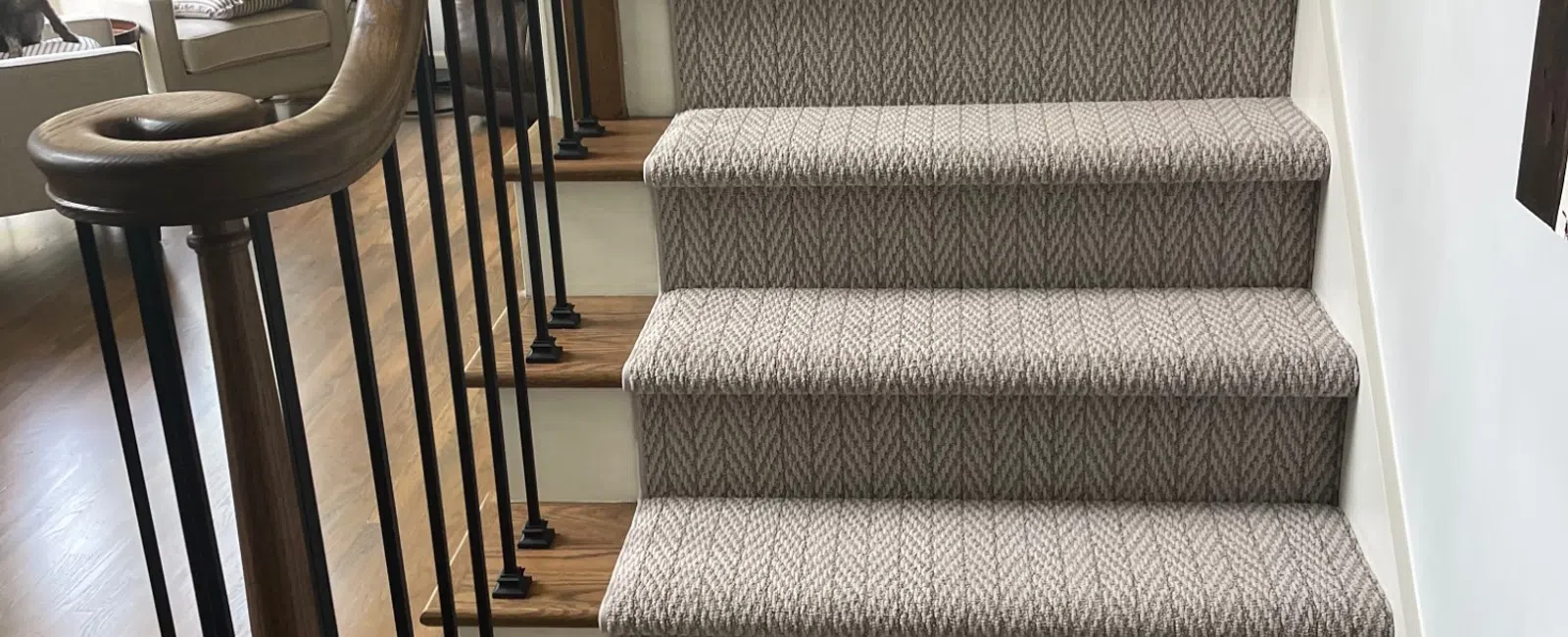
The right choice depends on what you want your staircase to do. Hardwood stairs add the most resale value and give you the cleanest, most formal look, matched to your main-floor wood. Carpet is quieter, softer, and more forgiving underfoot, and it is the natural pick when your upstairs is already carpeted. And if you want both, a hardwood staircase with a carpet runner gives you the wood on the sides and the softness and grip down the middle.
Stairs are the most-seen flooring in a home. Every guest walks past them, and they sit at the junction between your main floor and your upstairs. So this decision is worth getting right. Here is how hardwood and carpet actually compare on stairs, and when a runner is the better answer than either one alone.
Hardwood vs. carpet vs. runner, at a glance
| Hardwood stairs | Carpet stairs | Hardwood + runner | |
|---|---|---|---|
| Look | Formal, matches main-floor wood | Soft, cozy, more casual | Wood frame with a designer stripe of color |
| Sound | Louder underfoot | Quietest | Quieter than bare wood |
| Footing | Smooth; a runner adds grip | Most forgiving on a misstep | Grip down the center |
| Pets | Durable; nails can be heard | Soft, warm for older pets | Runner grips claws and protects the wood |
| Resale value | Highest | Neutral | High, with design appeal |
| Best when | Main level is hardwood | Upstairs is carpeted | You want wood and warmth together |
| Upkeep | Sweep and occasional refinish | Vacuum; replace when worn | Vacuum runner; wood lasts |
Hardwood stairs: the highest-value, most formal choice
Hardwood ties a staircase into the rest of the home. When your main level is already wood, running hardwood up the stairs makes the whole space read as one finished, deliberate design instead of stopping the wood at the bottom step. That continuity is why hardwood stairs add the most resale value of any stair option and give the cleanest, most formal look.
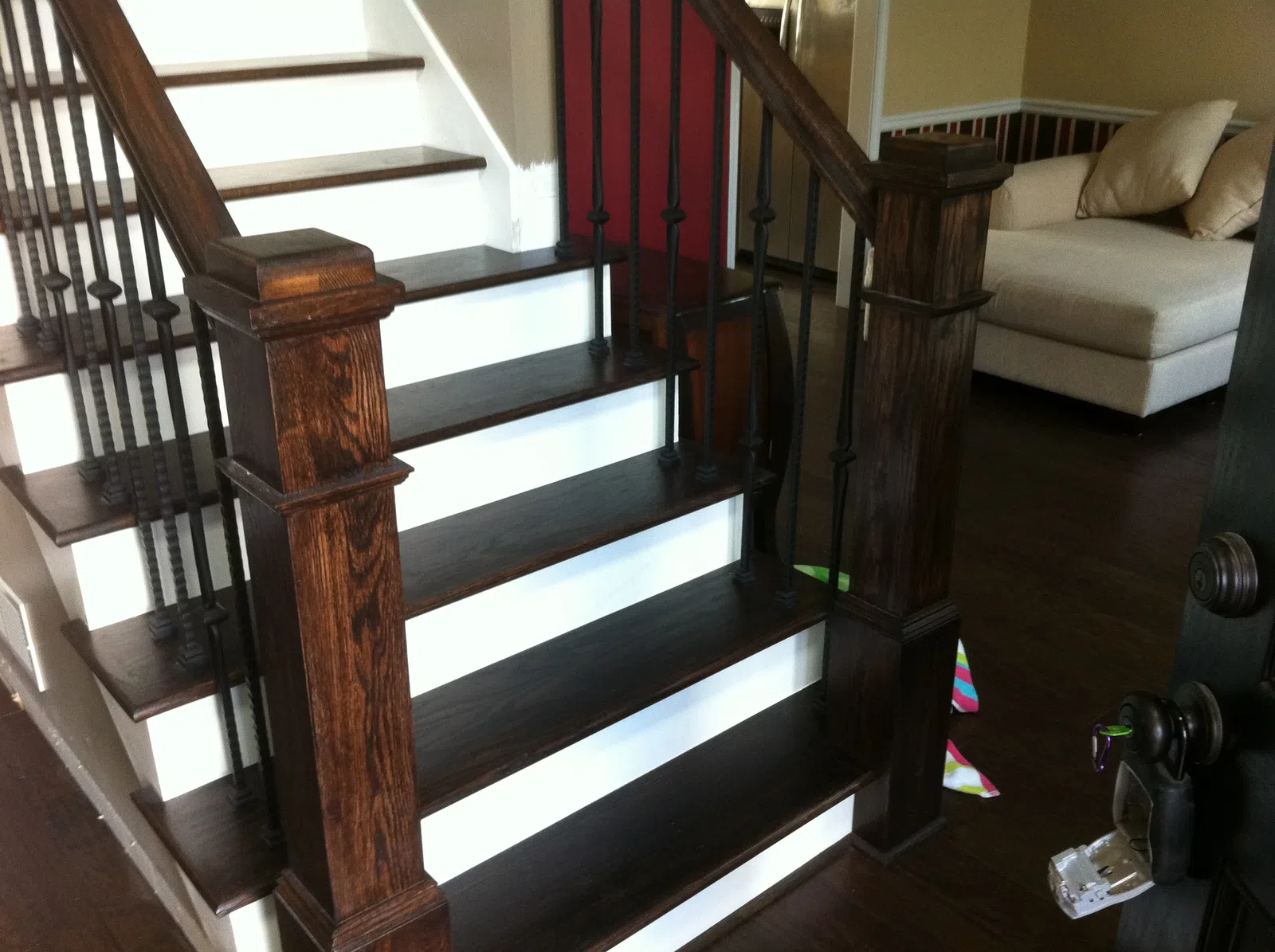
Hardwood on stairs is also built to last. Solid or engineered treads stand up to decades of daily traffic, and when the finish eventually wears, you can refinish the treads rather than replace them, the same way a hardwood floor can. Focus on the finish, since a finish rated for stair traffic and a bit of texture help with footing. Hardwood stairs are smooth by nature, so a runner is a common addition in homes with kids, older adults, or dogs who want more grip down the center.
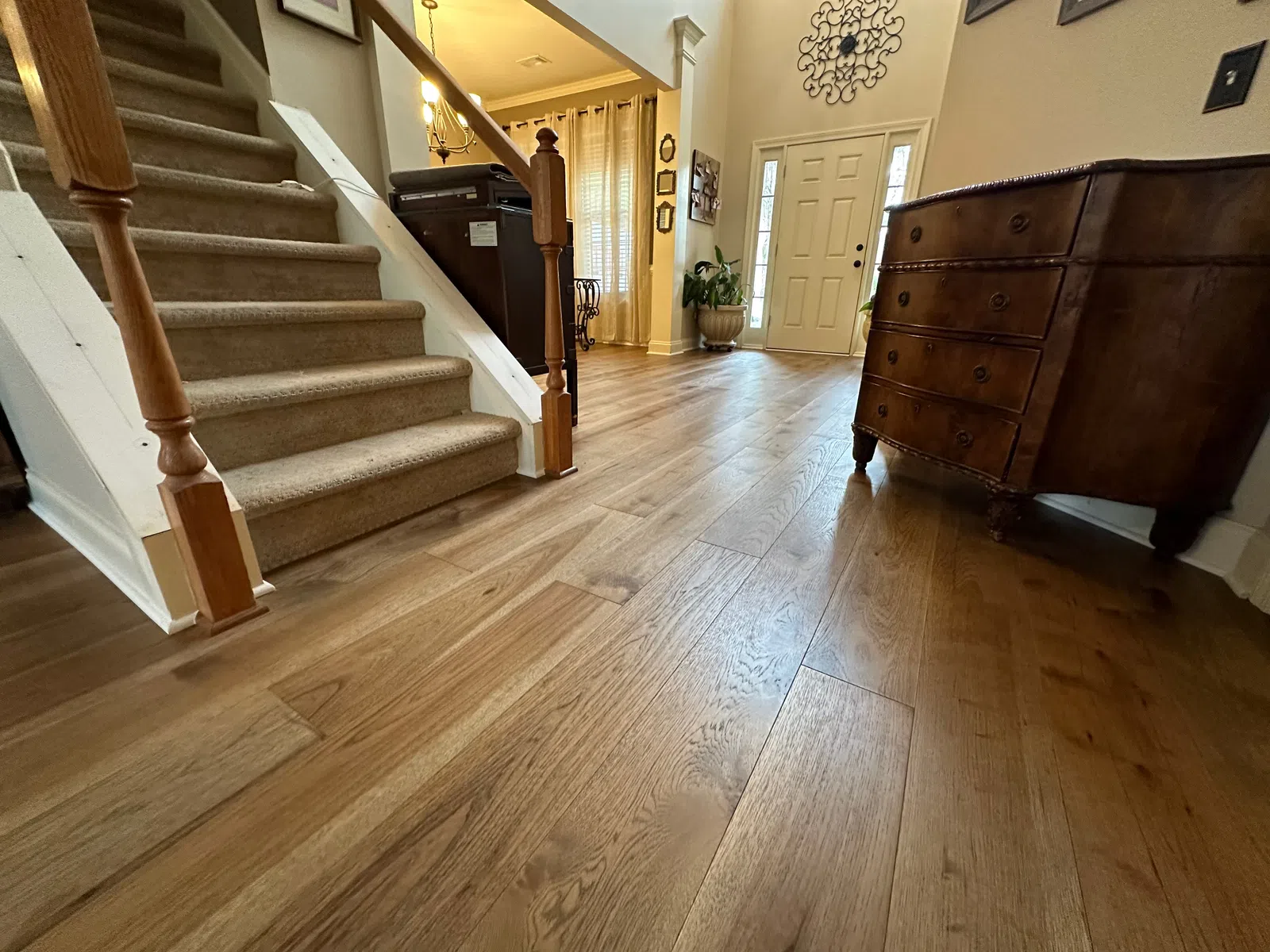
The most common version of this project in Atlanta is a carpet-to-hardwood conversion: pulling old carpet off the stairs and installing solid or engineered hardwood treads stained to match the main-floor wood. It is also the most technically demanding flooring work in a home because every tread, riser, and return is visible, and the stain has to match across it all.
Carpet stairs: the quietest, softest, most forgiving choice
Carpet earns its place on stairs where comfort, quiet, and footing matter most. It muffles the sound of a busy household on the stairs; it is warm and soft underfoot; and it is the most forgiving surface if someone misses a step, which is why many families with young kids or older parents prefer it. Carpet is also the natural choice when the upstairs is already carpeted, since it lets the stairs flow right into the hallway above for one continuous look.
The construction is what makes stair carpet last. A nylon tight-loop or low-profile cut pile holds up to concentrated stair traffic far better than a thick plush, and a firm, dense pad matters as much as the fiber for how a stair carpet feels and how long it lasts. For homes with dogs, a triexta fiber adds built-in stain resistance. We go deep on fiber and pad choices in our guide to the best carpet for stairs, and on what stands up to pets in our pet-friendly flooring guide. Installed with a proper waterfall or upholstered method, wall-to-wall stair carpet gives you a soft, quiet staircase that matches the floor above.
The runner: when you want both
For many homeowners, the best answer isn't either one. A hardwood staircase with a carpet runner keeps the wood visible on the sides and adds a strip of softness, color, and grip down the center. It is the highest design-impact stair upgrade for the money, and it solves the two things people worry about with bare wood stairs at once: it quiets the steps and adds traction underfoot.
This is also the answer for pet owners who love the look of wood. A runner grips a dog's claws for safer footing while protecting the treads underneath from scratches. Runners come in wool, synthetic, and natural fibers, with custom binding for a finished edge and optional stair rods for a more traditional look. Because the runner sits over hardwood treads rather than instead of them, you keep the resale value and formal look of wood while gaining the warmth and safety of carpet. Our stair runner installation handles the centered placement, tackless strips, and clean returns that make the difference between a runner that looks custom and one that looks crooked.
Which is safest on stairs?
Footing is a fair thing to weigh, since slips happen on stairs. Carpet and runners are the most forgiving surfaces, both for traction and for softening a misstep, which is why they are popular in homes with small children and older adults. Bare hardwood stairs are smooth, so if safety is a priority but you still want wood, a runner is the middle path: it adds grip down the center while keeping the wood you want on the sides. A finish rated for stair traffic also helps hardwood treads hold footing better than a high-gloss coating would.
How to decide for your home
The right call depends on the rest of your house and how you use your stairs. Choose hardwood when your main level is wood, you want the most resale value, and you like a clean, formal look. Choose carpet when your upstairs is already carpeted, and you want the quietest, softest, most forgiving stairs. Choose a runner when you want the wood and the warmth together, when you have pets, or when you want the biggest visual upgrade for the smallest budget.
Seeing it in place settles most of these decisions faster than any spec. A stain sample held against your existing floor, or a runner laid across three steps in your own light, tells you more than a showroom ever could.
An Atlanta note
Across North Atlanta, main-level hardwood is standard, so carpet-to-hardwood stair conversions and precise stain-matching are the stair projects we do most. In neighborhoods around Sandy Springs, Buckhead, and Johns Creek, wool runners over hardwood treads are a favorite way to add warmth and color to a formal staircase. In family homes with kids and dogs, runners and stair carpet win for quiet and footing. The right answer depends on the home, which is why we bring samples to your staircase before anyone commits.
See it on your own staircase
A staircase is the one project where a showroom sample cannot tell you the answer, because the point is how the stain, runner, or carpet matches your existing floors, walls, and light.
A dedicated Project Manager brings curated samples to your home: tread stains matched to your main-floor hardwood, runner colors and textures tested in your actual light, or stair carpet options if you are going wall-to-wall. You walk the staircase together and talk through nosings, returns, and transitions, then receive a written estimate within 24 hours that reflects the full scope. Our most experienced craftsmen handle stair work because stairs are the most-seen flooring in the home, and we back every installation with our Lifetime Installation Warranty. We have matched stains and installed stairs across North Atlanta since 2001.
Schedule your free in-home consultation, and we will help you choose the staircase that best fits your home.