
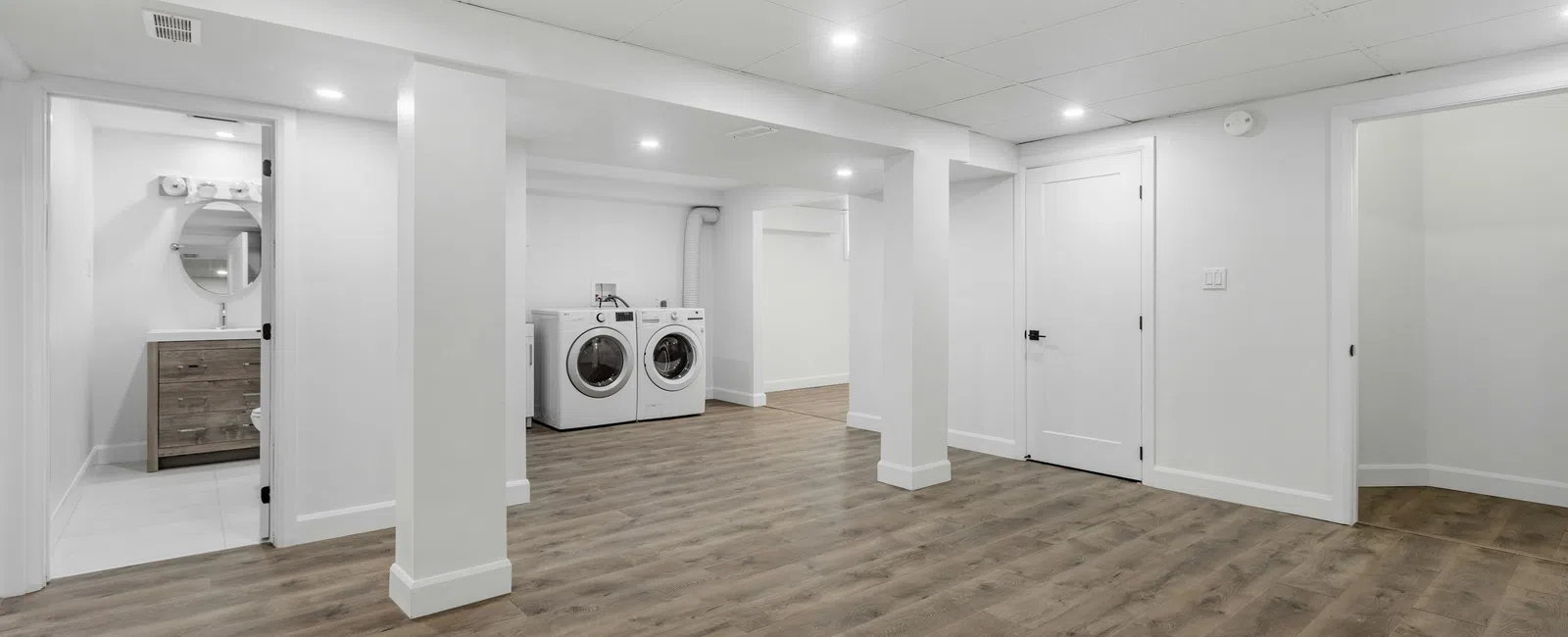
For most basements, waterproof luxury vinyl plank is the best flooring, and specifically the rigid SPC type. It handles the two things that ruin basement floors, moisture and a concrete slab, without the risk that comes with wood. Waterproof laminate and tile are strong runners-up. Carpet has a place in some dry, finished basements for comfort. Solid hardwood belongs almost anywhere except below grade.
That is the quick version. Which one is right for your basement depends on how the space gets used and how much moisture it sees, so here is the full breakdown, plus the prep step most people skip.
Why a basement needs different flooring than the rest of the house
A basement sits below ground on a concrete slab, and that changes everything about what can go down on top of it.
Concrete holds and releases moisture. Even a slab that looks bone dry pushes water vapor up from the ground through the pores in the concrete, a process called vapor drive. Add Atlanta's humidity and the storms that push groundwater against foundations, and a basement floor deals with moisture that a second-floor bedroom never will. Basements also experience more temperature swings than the living space above them.
Any floor going into that environment has to tolerate moisture from below, sit correctly over concrete, and stay stable through temperature changes. That single requirement, moisture tolerance, is what moves waterproof options to the top of the list and knocks solid wood off it.
The best basement flooring options, ranked
1. Waterproof luxury vinyl plank (SPC): the best all-around choice
For most basements, waterproof luxury vinyl plank is the flooring we recommend. The reason is the core. SPC (Stone Plastic Composite) vinyl uses a dense limestone-and-PVC core that does not absorb water, swell, or warp, and its rigidity lets it sit flat over a slab and bridge minor imperfections in the concrete. It gives you a real wood- or stone-look, a warmer, quieter surface than tile, and a floor you can wipe down after a leak instead of tearing out.
Within vinyl, rigid SPC construction is the safer basement pick over the softer WPC type, because SPC is more dimensionally stable across the temperature swings a basement sees. Wear layer matters too: a thicker wear layer (20 mil or more) holds up better in a basement that doubles as a playroom, home gym, or high-traffic family space.
2. Waterproof laminate: a good middle option
The newer waterproof laminate products, with sealed cores and sealed seams, can also work in a basement and often cost less than comparable vinyl. They give you a laminate with a harder, more realistic wood surface. The caution is that not all laminates are waterproof. Standard water-resistant laminate does not belong below grade, where moisture is constant rather than occasional. If you go this route, the product has to be a true sealed-core waterproof laminate, and moisture control underneath still matters.
3. Tile: durable and fully waterproof, but cold
Porcelain or ceramic tile is genuinely waterproof and extremely durable over concrete, and it can go straight onto a properly prepped slab. The trade-offs are comfort and cost. Tile is hard and cold underfoot, which matters in a room already prone to feeling chilly, and installation runs higher than vinyl. Tile makes the most sense for basement bathrooms, wet bars, or walk-out basements with a more finished, higher-end feel.
4. Carpet: comfort in a dry, finished basement only
Carpet adds warmth and softness that a below-grade room often lacks, and for a finished basement used as a bedroom or media room, that comfort is worth something. The condition is that the basement has to be genuinely dry, with no history of water intrusion. In a damp basement, carpet holds moisture and invites mold. If you want carpet down there, low-pile basement-friendly carpet or carpet tiles over a proper moisture barrier and subfloor are the safer approach. Many homeowners get the best of both by installing vinyl plank and adding an area rug for warmth. Our guidance on choosing carpet covers, fibers, and pads that hold up in low-traffic rooms.
5. Hardwood: not below grade
Solid hardwood should not be installed below grade. It absorbs moisture from the slab, then cups, gaps, and warps. Engineered hardwood is more stable and is occasionally used in bone-dry, humidity-controlled basements, but it is still a gamble against slab moisture, and most flooring pros steer basement projects toward waterproof vinyl instead. If real wood is a must-have for you, it is worth having a candid conversation about whether the basement can meet the conditions it requires.
The step most people skip: moisture testing and slab prep
The product you pick matters less than what happens under it. A waterproof floor installed over an untested, unprepped slab can still fail at the subfloor and the seams.
Before anything goes down, the slab should be moisture-tested. If readings are high, a vapor barrier or moisture-mitigation layer goes down first. The slab also needs to be flat and clean, since low spots and debris telegraph through the finished floor and stress the seams. On a basement job, this prep work, testing, sealing, and leveling is what separates a floor that lasts fifteen years from one that lifts in three. It is also the part that a rushed quote tends to leave out.
Basement flooring on a budget
If cost is the driver, the cheapest paths are sheet vinyl, peel-and-stick tiles, or simply sealing or epoxy-coating the bare concrete for a utility space. These get a floor down for less, with the honest trade-off of lower durability and weaker resale appeal. Carpet tiles land in the affordable middle for a dry playroom.
The better value over time, for a finished basement you actually want to enjoy, is a mid-tier SPC vinyl plank. It costs more up front than sheet vinyl and less than tile, and it withstands the moisture and traffic that would wear out the cheaper options within a few years.
An Atlanta note
Slab foundations are common across metro Atlanta, and the region's humidity and heavy storms put steady pressure on below-grade floors. That combination is why we default to SPC vinyl for most basement installations here, and why we moisture-test the slab before recommending anything. A floor that performs in a dry climate can still fail in a humid Georgia basement if the prep is wrong.
Get the right basement floor the first time
A basement is the room where the wrong floor shows up fastest, and where slab prep decides as much as the product. That is worth getting right once.
A dedicated Project Manager comes to your home, moisture-tests, inspects your actual slab, and brings samples of the SPC vinyl plank we install in basements so you can see the wood and stone looks in your own space. You get a written estimate within 24 hours that spells out the real scope, including moisture mitigation, subfloor prep, and transitions, not a number that hides the prep and surprises you later. Every job is backed by our Lifetime Installation Warranty, and we have installed basement floors across North Atlanta since 2001. If a basement genuinely calls for something other than vinyl, we will tell you that, too.
Schedule your free in-home consultation, and we will help you choose a basement floor designed for the room it will go into.