
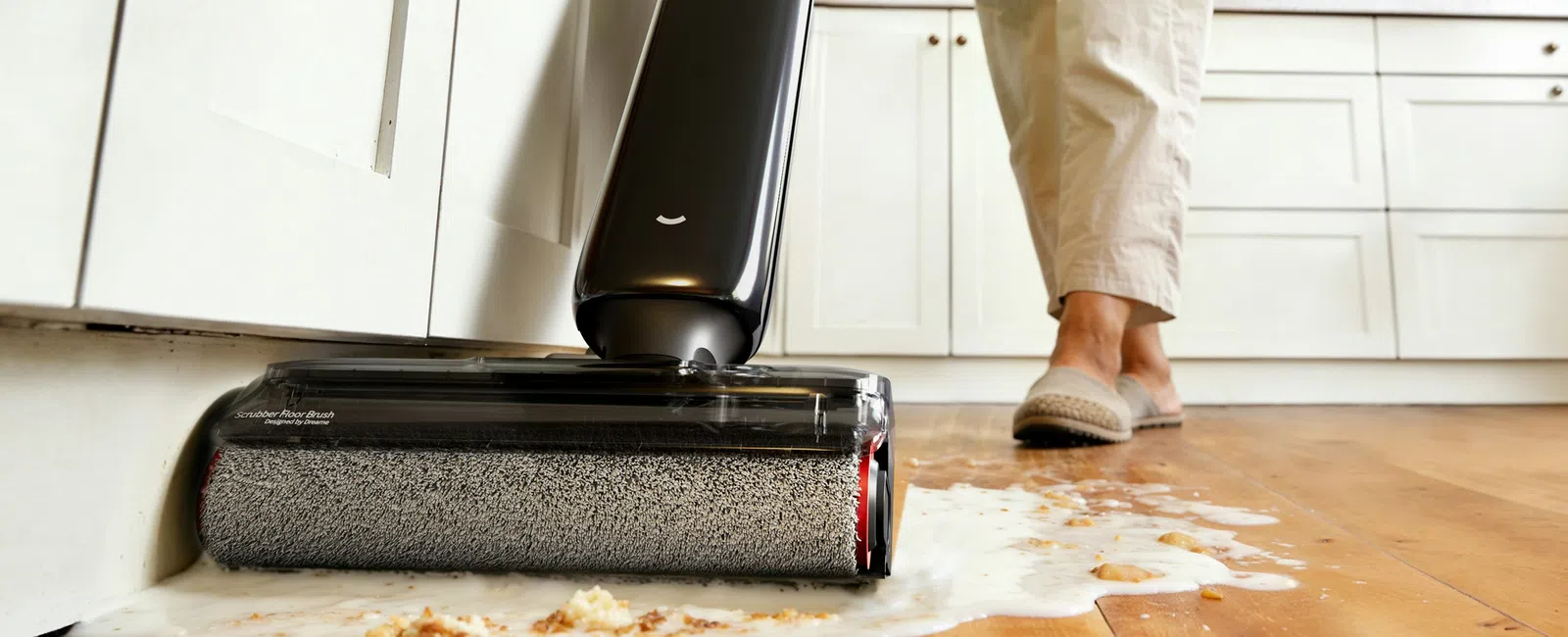
For most kitchens, waterproof luxury vinyl plank is the best flooring. It handles spills without risk, stays comfortable to stand on, and costs less than the alternatives. Waterproof laminate is a close second and often looks more like real wood. Hardwood is still a strong choice in an open-concept home where the kitchen flows into living space, as long as you accept that it needs more care. Tile is the most durable and the least comfortable to stand on.
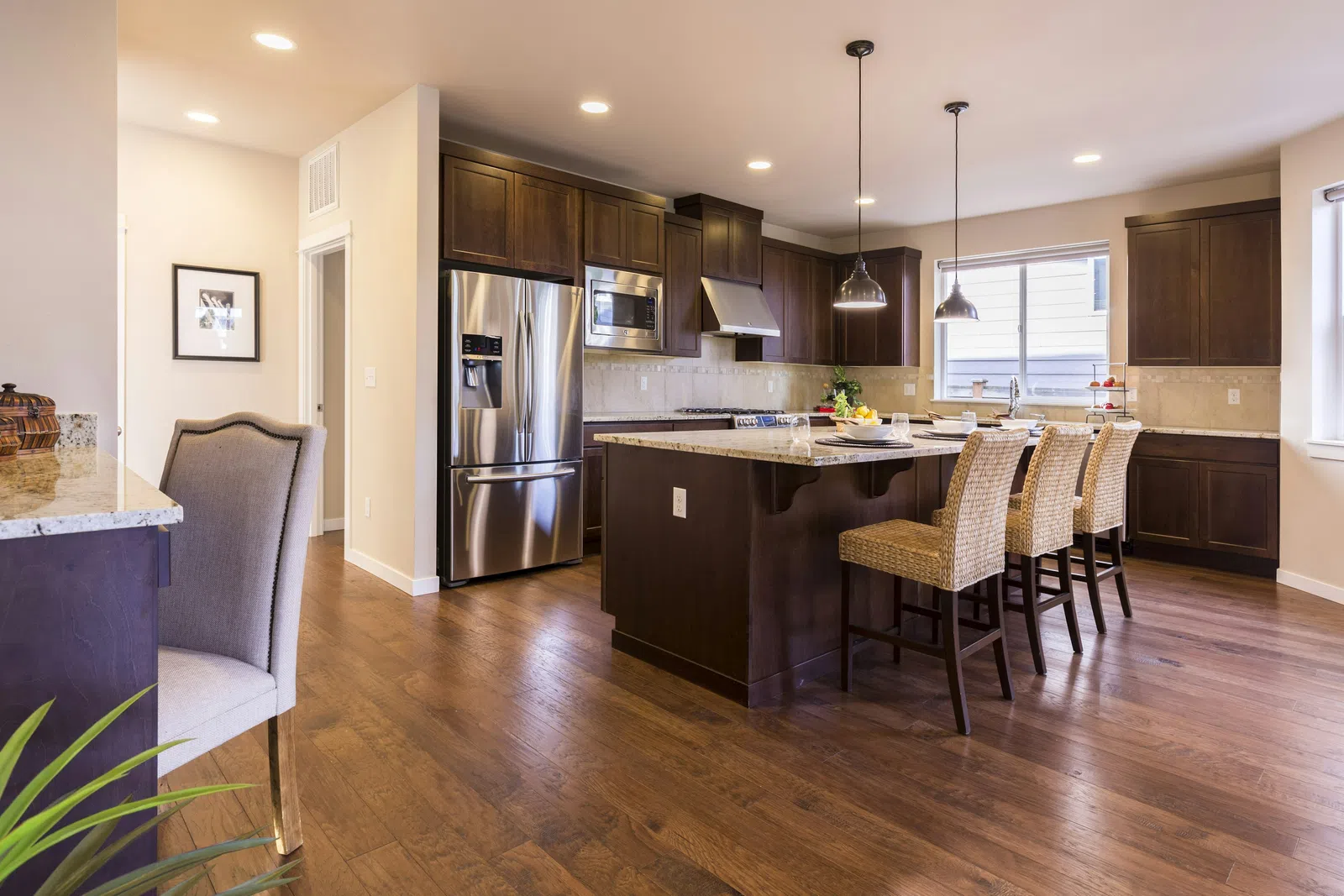
The kitchen is the hardest-working floor in a house, and the one where people most often regret their choice. Here is how the options actually compare.
Kitchen flooring compared
| Waterproof LVP | Waterproof laminate | Hardwood | Tile | |
|---|---|---|---|---|
| Water performance | Waterproof core | Sealed core, handles spills | Needs prompt wipe-up | Fully waterproof |
| Comfort standing | Softest, warmest | Firm | Warm, moderate give | Hardest, coldest |
| Scratch resistance | Good | Highest | Varies by species | Very high |
| Dropped-dish survival | Dents possible | Can chip | Dents possible | Dish breaks, tile may chip |
| Resale value | Neutral | Neutral | Highest, 118% per NAR | Neutral |
| Repairability | Replace a plank | Replace a plank | Sand and refinish | Replace a tile |
| Best for | Most kitchens | Kitchens wanting wood realism | Open-concept main levels | High-end, radiant heat |
What makes a kitchen different from every other room
A kitchen floor takes abuse no other room does, and it takes several kinds at once.
Water arrives constantly, from the sink, the dishwasher, the refrigerator line, and every glass that gets knocked over. Most of it is minor and wiped up in seconds. The risk is the slow leak nobody notices behind an appliance, which is where non-waterproof floors fail.
Then there is standing. Cooking a real meal means an hour or more on your feet in one spot, which is why the hardest, coldest floor in the house tends to be the one people complain about. Grease, dropped cans, dragged stools, and pet bowls fill in the rest. A kitchen floor has to be water-tolerant, comfortable, and tough at the same time, and no single material maxes out all three.
The best kitchen flooring options
Waterproof luxury vinyl plank: the practical winner
Luxury vinyl plank is the floor we recommend for most Atlanta kitchens. Its waterproof core means a dishwasher leak is an inconvenience instead of a replacement, and the surface is softer and warmer underfoot than tile or laminate, which matters during a long stretch at the stove. Wood-look and stone-look options both read convincingly now.
For a kitchen, wear layer is the spec that matters most. A thicker wear layer, 20 mil or above, holds up better under the chair-dragging and appliance traffic a kitchen sees. Rigid SPC construction also sits flatter over an uneven subfloor, which older Atlanta kitchens frequently have. The honest trade-off is that heavy appliances and furniture legs can dent the softer surface over time, and it does not add resale value the way wood does.
Waterproof laminate: the wood look at a lower price
The waterproof laminate category has changed the kitchen conversation. A sealed core and sealed seams let laminate handle kitchen spills, and laminate keeps the advantages it has always had: the hardest wear surface available, the most convincing wood grain and texture for the money, and a quieter step than vinyl. It usually costs less than comparable LVP.
Standard water-resistant laminate is the one to keep out of a kitchen. The distinction between the two is worth understanding before you shop, and we covered how the sealed-core products actually work in our guide to waterproof laminate flooring.
Hardwood: still the right answer in some kitchens
Hardwood in a kitchen makes plenty of people nervous, and it should not. Hardwood has been in kitchens for a century. It needs prompt spill cleanup, and it will show wear near the sink, but it brings two things nothing else does.
The first is resale value. The National Association of Realtors puts the return on new hardwood flooring at roughly 118%, the highest of any flooring choice. The second is continuity. In an open-concept home where the kitchen opens onto the living and dining areas, running one hardwood floor through the whole level makes the space read larger and more deliberate than breaking it up with a transition strip.
If you go this route, the product choice matters. Harder species like hickory and white oak stand up better to kitchen traffic, and wire-brushed or hand-scraped textures hide the scratches a kitchen will inevitably produce. On a concrete slab, which is common in newer Cherokee County and north Atlanta construction, engineered hardwood is the appropriate product rather than solid. Hardwood also has a repair advantage no other floor matches: when it eventually looks tired, it can be sanded and refinished instead of replaced.
Tile: the most durable, the least comfortable
Porcelain and ceramic tile are fully waterproof, close to impervious to kitchen abuse, and the traditional choice for a reason. Tile also pairs well with radiant floor heat, which solves its biggest weakness.
Without radiant heat, that weakness is real. Tile is hard and cold, dropped dishes shatter on it rather than bounce, and standing on it for an hour is noticeably less pleasant than standing on vinyl or wood. Grout lines also need periodic sealing and cleaning to stay looking sharp. Tile earns its place in kitchens where durability and a specific design look outrank comfort.
What to avoid in a kitchen
Carpet does not belong in a kitchen, since it absorbs grease and spills and cannot be cleaned the way a hard surface can. Standard water-resistant laminate and solid hardwood installed over a slab are the other two combinations that reliably cause problems later.
Should the kitchen and living room have the same floor?
This is the question that decides more kitchen projects than material specs do, especially in open-concept homes.
Running one continuous floor through the kitchen, living, and dining areas almost always makes an open floor plan look bigger and more finished. A transition strip in the middle of a sightline chops the space visually, and the smaller the footprint, the more that hurts. So in an open-concept main level, matching is usually the stronger choice, which is part of why waterproof LVP, waterproof laminate, and hardwood have all become popular for whole main levels rather than single rooms.
Where the kitchen is a separate, walled room, mixing is fine. A defined doorway is a natural place for materials to change, and nobody reads it as a mistake. The rule of thumb: if you can see both floors at once from a normal standing position, match them. If you cannot, do whatever suits each room.
Kitchen flooring trends in Atlanta homes right now
Wide-plank wood looks continue to dominate, in both real hardwood and the vinyl and laminate products that imitate it. Color has settled into warm and natural mid-tones after years of gray, and low-gloss matte and wire-brushed finishes have largely replaced shiny ones, partly because they hide scratches and footprints better.
The other clear shift is toward whole-level continuity. More Atlanta homeowners are running a single wide-plank vinyl floor across the kitchen, living, and dining areas instead of tiling the kitchen and flooring everything else, which is a practical response to how open modern floor plans have become.
See kitchen samples in your own kitchen
Kitchen flooring is the one decision where showroom lighting misleads people most. Your cabinets, countertop, and window light change how every sample reads, and none of that is visible in a store.
A dedicated Project Manager brings curated samples to your home, including the vinyl plank we install in kitchens, waterproof laminate options, and hardwood species and finishes if you are considering running one floor across an open main level. You see each one against your actual cabinets, in your actual light. You get a written estimate within 24 hours that reflects your real kitchen, including subfloor prep and transitions, rather than a phone quote based on averages.
Every installation is backed by our Lifetime Installation Warranty, and we have been installing floors across north Atlanta since 2001. If your kitchen calls for something other than what you came in wanting, your Project Manager will tell you that.
Schedule your free in-home consultation, and we will help you choose a kitchen floor you will still be happy with in ten years.