
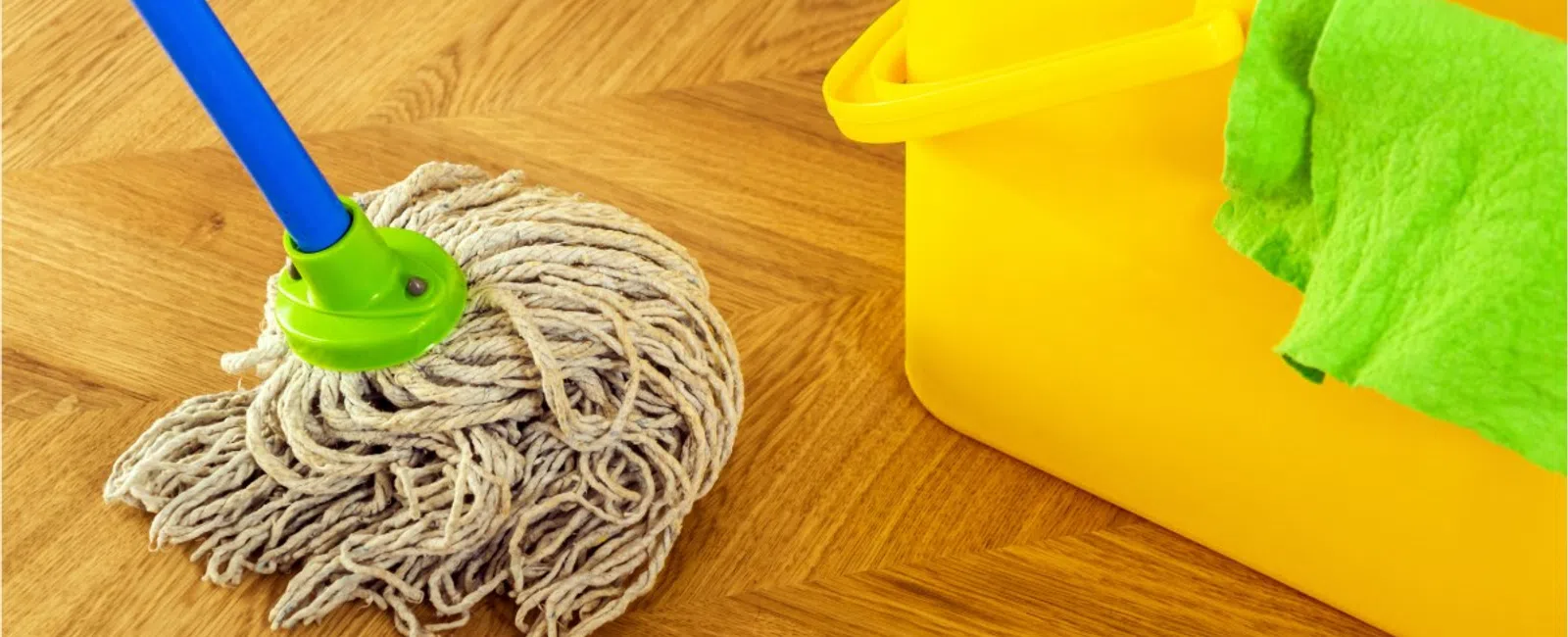
To clean hardwood floors, remove the grit first with a microfiber dust mop or a vacuum on its bare-floor setting, then damp-mop with a cleaner made for finished wood floors and a mop wrung out until it's barely wet. Grit scratches the finish and standing water swells the boards, so a good routine handles both. Done consistently, it keeps the protective coating intact and pushes your next refinish further down the road.
A Simple Routine for Cleaning Hardwood Floors
Hardwood requires less effort than most people expect. A routine that works for most homes looks like this:
- Every day or two, run a microfiber dust mop through the kitchen, entry, and hallways, where grit collects fastest.
- Once a week, vacuum the whole floor with the beater bar off, then damp-mop with a hardwood floor cleaner.
- Whenever something spills, wipe it up right away and spot-clean any sticky residue.
Start Dry With a Dust Mop or Vacuum
The surface you actually clean is the finish, a clear layer of polyurethane that sits on top of the wood. Sand and grit act like sandpaper on that layer every time someone walks across it, which is why traffic lanes go dull first. Getting grit off the floor is the most useful thing you can do. A microfiber dust mop holds onto fine dust and pet hair instead of pushing it around. When you vacuum, switch to the bare-floor setting or use a hard-floor head, because a spinning beater bar scratches the finish over time.
Damp-Mop Instead of Wet-Mopping
Water turns a cosmetic problem into a structural one. When a soaked mop leaves liquid on the floor, it works into the seams between boards and the wood swells, which is how cupped boards and raised edges start. Mist the cleaner onto the floor or onto a microfiber mop pad, work a few feet at a time in the direction of the boards, and make sure each section dries within a minute or two. If you see puddles or streaks of standing water, the mop is too wet.
What to Use to Clean Hardwood Floors
Use a pH-neutral cleaner labeled for polyurethane-finished wood floors. It lifts everyday grime without leaving anything behind. Many all-purpose household cleaners do leave residue, and it builds into a dull haze over time. That film causes a second problem later, because it can keep a new coat of finish from bonding when the floor is eventually refinished.
If you aren't sure what finish your floor has, test a hidden spot such as the inside of a closet. Put a few drops of water down and wait about a minute. Water that beads up means a surface finish like polyurethane, which is what most modern hardwood floors have. Water that soaks in and darkens the wood points to a wax or penetrating oil finish, and those need the specific products their maker recommends.
What Not to Use on Hardwood Floors
A lot of cleaning damage comes from products that seem harmless. Keep these off your floors:
- Steam mops, which force heat and moisture into the seams and can cloud or lift the finish
- Vinegar, ammonia, and bleach, which can dull polyurethane with repeated use
- Oil soaps, paste waxes and "shine restorers," which leave a film that attracts dirt and interferes with future refinishing
- Buckets of soapy water, soaked string mops, steel wool and abrasive scrub pads
How to Deep Clean Hardwood Floors
A deep clean is your weekly routine done more thoroughly, not a stronger chemical. Every few months, move the lighter furniture, vacuum along the baseboards and corners with a crevice tool, and damp-mop in small sections with your regular hardwood cleaner. Swap or rinse the mop pad as soon as it looks dirty so you lift grime instead of spreading it, then buff any damp spots dry with a clean microfiber cloth.
If the floor still looks cloudy or streaky afterward, the cause is usually product buildup rather than dirt. A residue remover made for finished wood floors can clear it, but test it in a closet first. If the floor looks gray, rough, or worn through in the traffic lanes, cleaning won't bring it back. That wear means the finish itself is gone and the wood needs refinishing.
Cleaning Engineered and Prefinished Hardwood Floors
Engineered and prefinished hardwood floors clean the same way as solid hardwood: dry first, damp second, no standing water. Prefinished boards come with a hard factory-applied finish that stands up well to daily cleaning. The small beveled edges between prefinished boards collect dirt, so vacuum along the length of the boards rather than across them.
Engineered hardwood has a real wood top layer bonded over a layered core. That top layer limits how many times the floor can be sanded, and thinner ones may allow only one refinish or none at all, so protecting the finish matters even more. If you have prefinished or engineered hardwood, check the manufacturer's care guide as well, since some product warranties specify which cleaners to use.
Spot Cleaning Spills, Scuffs and Pet Accidents
Wipe liquid spills right away with a dry cloth, then go over the spot with a cloth lightly dampened with hardwood cleaner and dry it. For a sticky spot from juice or syrup, let the cleaner sit for a few seconds to soften it before wiping. Most shoe scuffs come off with a dry microfiber cloth and light pressure.
Pet accidents need fast attention. Urine that sits can soak past the finish into the wood, leaving dark stains no cleaner will lift. Blot it up, clean the spot, and dry it completely. Stains that have already set into the wood usually come out only with sanding during a full refinish, and badly damaged boards can be replaced and blended in at the same time. For small surface scratches between refinishes, a touch-up pen in your stain color, sold at most paint stores, hides them well.
Habits That Keep Hardwood Floors Cleaner Longer
The less grit and pressure that reaches the floor, the less cleaning it needs and the longer the finish lasts.
- Put felt pads under chair and furniture legs, and replace them when they wear thin or pick up grit.
- Use felt rug pads, never rubber, because rubber can bond to polyurethane and damage the finish.
- Keep mats at exterior doors, trim dog nails regularly, and keep high heels and athletic cleats off the floor.
Cleaning Newly Refinished Hardwood Floors
Fresh finish needs time to harden. Polyurethane keeps curing for several weeks after the final coat: oil-based finishes take around 30 days to fully harden, and water-based finishes generally cure faster. During that window, stick to dry dust-mopping as much as you can, treat the floor gently, and keep area rugs off for two to four weeks so the finish can set underneath them.
When Cleaning Hardwood Floors Isn't Enough
Even with good care, the finish wears down eventually. Most well-maintained hardwood floors need a full refinish every 10 to 15 years, and sooner in busy homes with kids and dogs or in sunny rooms and entryways. A dull finish in the traffic lanes that cleaning doesn't change, gray or bare wood, and scratches that cut through the finish are the signs it's time.
When it is, we recommend sanding to raw wood rather than a screen-and-coat. Scuffing the old finish and rolling a fresh coat on top is faster, but the new coat often doesn't bond reliably to the old one and can start peeling within months. Our hardwood floor refinishing takes the floor back to bare wood and rebuilds it with stain and three coats of polyurethane.
If you aren't sure whether your floors need a deep clean, a refinish or replacement, a Project Manager can look at them during a free in-home consultation and give you a straight answer.