
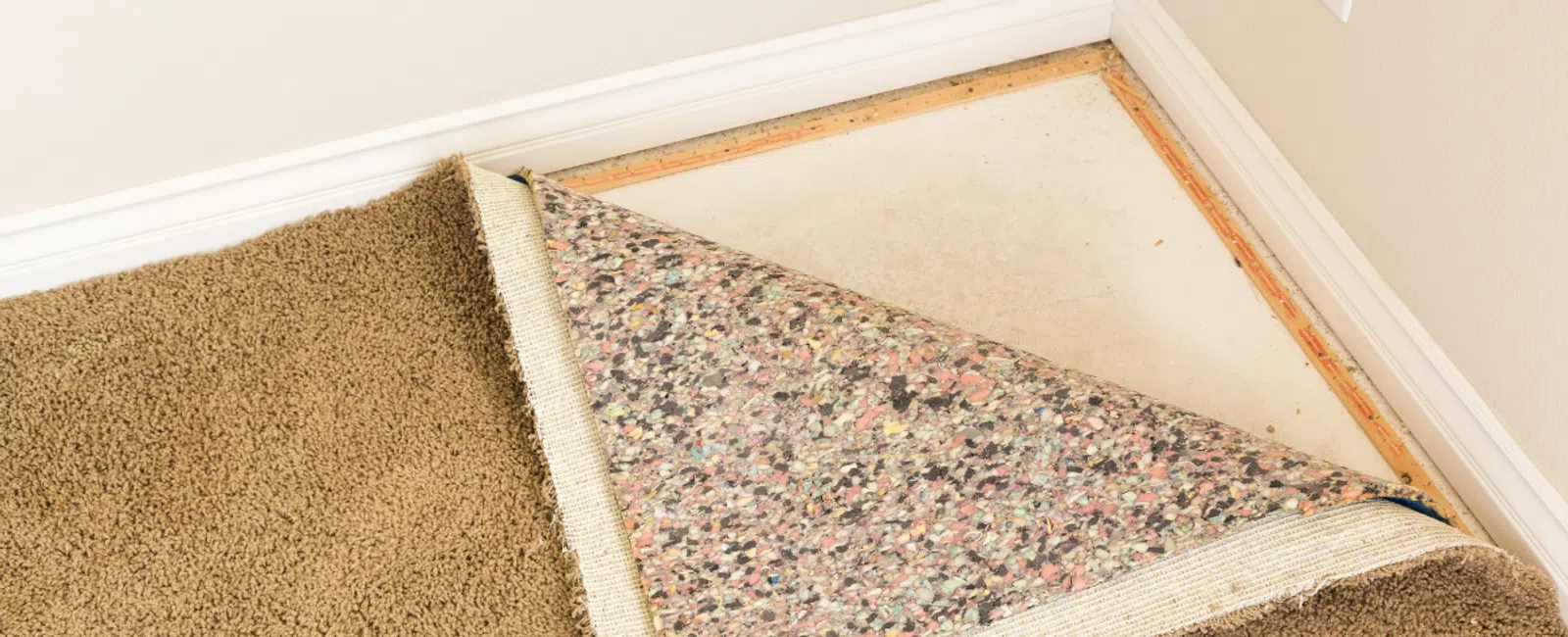
The right carpet padding is a firm, correctly sized pad that matches your carpet style and the room it goes in. For most homes, that means a 6- to 8-pound rebond pad no thicker than 7/16 inch under cut pile carpet, a thinner and firmer pad under Berber or loop carpet, and a moisture barrier pad anywhere pets, kids, or spills are part of daily life. Thicker and softer is not automatically better. A pad that is too plush can shorten your carpet's life and may not meet the manufacturer's warranty requirements.
We install carpet in homes across North Atlanta every week, and the pad is one of the most overlooked parts of the job. Homeowners spend a lot of time choosing color and texture, then pick whatever pad comes bundled with the quote. This blog explains what carpet padding does, the main types, how to read thickness and density, and which pad we recommend room by room.
What Carpet Padding Does
Carpet padding, also called carpet cushion or underlayment, is the layer that sits between your subfloor and your carpet. You never see it, but it affects almost everything you notice about the carpet above it.
- Comfort underfoot. The pad gives carpet its soft, cushioned feel when you walk, sit or kneel on it.
- Longer carpet life. A supportive pad absorbs foot traffic so the carpet fibers and backing do not take the full impact. A mid-grade carpet over a quality pad often outlasts a premium carpet over a cheap one.
- Noise reduction. Padding softens footsteps and reduces sound traveling between floors, which matters most in upstairs bedrooms and bonus rooms.
- Insulation. A pad adds a layer between you and a cold slab or subfloor, so rooms feel warmer underfoot.
- Easier cleaning. Carpet over a good pad releases dirt more easily when you vacuum, because the carpet has room to lift slightly as the vacuum passes.
The Main Types of Carpet Padding
Carpet pads fall into a few main categories. Each has a place, and the best choice depends on the carpet style and how the room is used.
| Pad type | What it is | Best for | Watch out for |
|---|---|---|---|
| Rebond foam | Recycled foam pieces bonded together into a multicolored sheet | Most living areas, bedrooms and family rooms | Low-density versions compress quickly |
| Memory foam | Foam that slowly returns to shape, often layered on a rebond base | Bedrooms and low traffic rooms where comfort comes first | Too soft for stairs, hallways, and loop carpet |
| Frothed foam | Dense, uniform urethane foam | Long-term durability in busy rooms | Usually a higher price point |
| Rubber | Flat or waffle rubber sheet | Heavy traffic areas where longevity matters most | Heavier and costlier than foam |
| Fiber (felt or synthetic) | Thin, firm pad made from pressed fibers | Berber and loop carpet | Feels firmer than foam underfoot |
| Moisture barrier | Any of the above with a spill-resistant film on top | Homes with pets, kids, or basements | Film side must face up toward the carpet |
Rebond Is the Most Common Choice
Rebond is the pad you will see in most residential installations. It is made from recycled foam scraps bonded together, which is why it has a speckled, multicolored look. Rebond offers a good balance of comfort, support, and value, and it comes in a range of densities. The density you choose matters more than the fact that it is rebond.
Memory Foam Adds Comfort, Not Durability
Memory foam pads feel luxurious in a showroom, and they are a nice upgrade for a primary bedroom or a kids' play area. They are not the right pick for every room. Soft memory foam lets the carpet flex more with every step, which can lead to wrinkles and faster wear in busy spaces.
Moisture Barrier Pads Protect Against Spills
A moisture barrier pad has a thin film bonded to the top surface. When a pet has an accident or someone spills a drink, the liquid stays on top of the pad instead of soaking into the foam, where it can cause lingering odors. Many carpet warranties that cover pet stains or odors also call for a moisture barrier pad, so it is worth asking about if you have pets.
The Best Carpet Padding for Each Room
There is no single best carpet pad for every room in the house. Here is what we typically recommend.
Bedrooms
Bedrooms see lighter traffic, so you can prioritize comfort. A 6 to 8 pound rebond pad at 7/16 inch works well under cut pile carpet, and a memory foam pad is a good upgrade if you want a softer feel. If you are still deciding between carpet and a hard surface, see our guide to the best flooring for a bedroom.
Living Rooms, Family Rooms and Bonus Rooms
These rooms get steady daily use. An 8-pound rebond pad gives a comfortable feel while holding up to foot traffic, furniture, and kids playing on the floor. Add a moisture barrier if pets or snacks spend time in the room.
Hallways and Stairs
Traffic concentrates in narrow paths here, so support matters more than softness. Choose a firm, dense pad, typically 8-pound rebond, and keep it on the thinner side on stairs so the carpet wraps tightly around each nose.
Berber and Loop Carpet
Loop carpet needs a thin, firm pad, no thicker than 3/8 inch. A soft or thick pad lets the loops flex and pull apart, which can cause seams to separate and the backing to wear out early. High density rebond or a fiber pad is the usual choice.
Basements
Carpet over a concrete slab needs a pad that can handle the conditions below grade. A moisture barrier pad helps protect against spills from above, but it does not solve moisture coming up through the slab. That is why we check the slab before recommending carpet in any basement. Our article on the best flooring for a basement explains when carpet is a good fit and when another floor makes more sense.
Signs Your Carpet Pad Needs to Be Replaced
Carpet padding is replaced along with the carpet. We do not recommend reusing an old pad under new carpet, since a worn pad will shorten the life of the new carpet and can affect the warranty. These signs point to a pad that has broken down:
- Ripples or wrinkles that return after the carpet has been stretched
- Floors that feel flat, hard or uneven when you walk across them
- Crunching or crackling sounds underfoot
- Odors that come back after the carpet is cleaned, often from spills that soaked into the pad
- Visible traffic lanes where the carpet feels thinner than the rest of the room
If several of these sound familiar, read Is It Time to Replace Your Carpet? for more signs, and Carpet Care Tips for keeping your next carpet looking new longer.
Let Us Match the Pad to Your Carpet
Choosing the right carpet padding is easier when someone looks at the room, the subfloor, and the carpet you love together. Our project managers bring carpet and pad samples to your home, walk through how each room is used, and put the pad specs in your written estimate so you know exactly what is going under your carpet. Every installation is backed by our Lifetime Installation Warranty.
Learn more about our carpet installation services, or schedule a free in-home consultation.
Frequently Asked Questions About Carpet Padding
What are the benefits of carpet padding?
Carpet padding makes carpet more comfortable underfoot, absorbs foot traffic so the carpet lasts longer, reduces noise between floors, adds insulation, and helps carpet release dirt when you vacuum.
How thick should carpet padding be?
For most residential cut pile carpet, the pad should be no thicker than 7/16 inch. For Berber, loop, and thinner carpets, it should be no thicker than 3/8 inch. Always follow the carpet manufacturer's pad requirements.
Can you reuse carpet padding?
We do not recommend it. An old pad has already compressed and may hold odors or moisture, which shortens the life of new carpet. Many carpet warranties also require a new pad that meets specific requirements.
How long does carpet padding last?
A quality pad is designed to last as long as the carpet above it. Low density pads can flatten much sooner, which is one reason carpet over a cheap pad often wears out early.
Is a rug pad the same as carpet padding?
No. Carpet padding is installed under wall-to-wall carpet. A rug pad goes under an area rug to keep it from sliding and to add cushion. If you place an area rug on top of carpet, use a rug pad made specifically for carpet to keep the rug from shifting.