
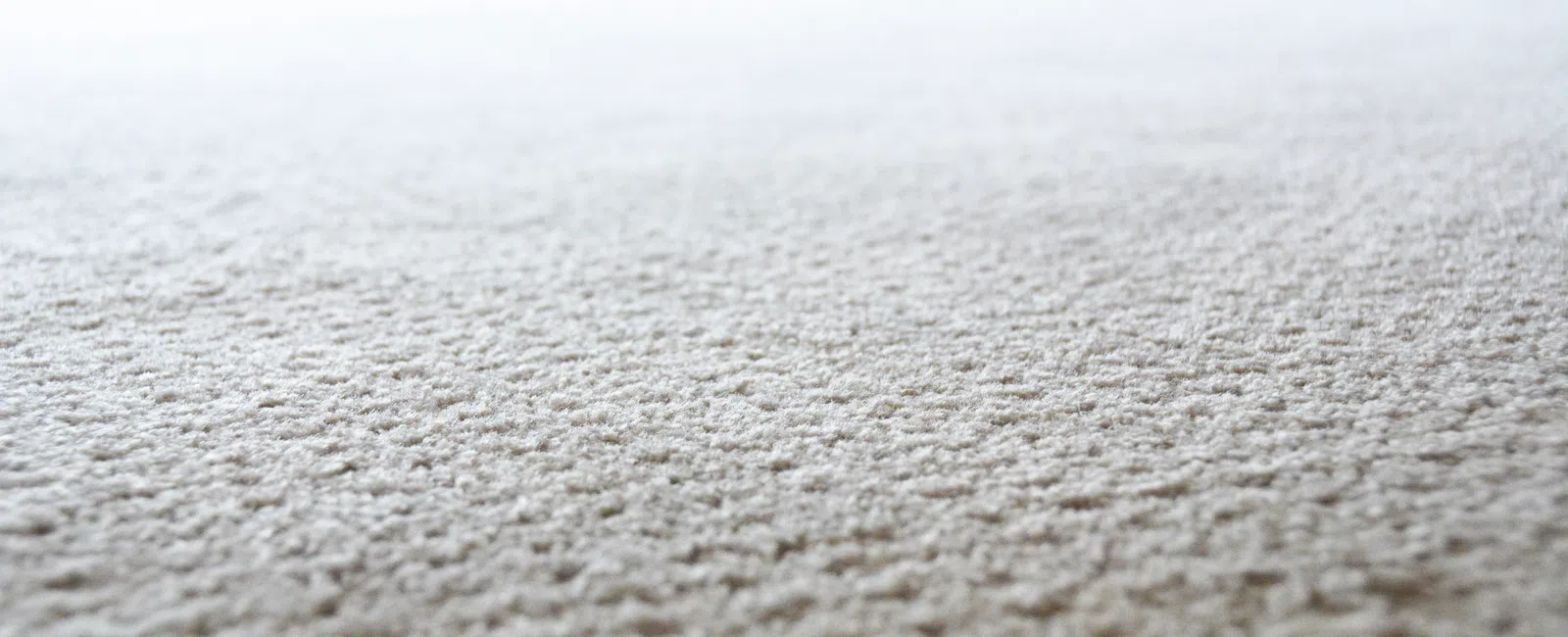
The main types of carpet are cut pile, loop pile, and cut-and-loop. Cut pile includes plush, Saxony, textured and frieze styles, while loop pile includes Berber and level loop. Every style is also made from a fiber, usually nylon, polyester, triexta or wool, and that fiber decides how well the carpet holds up. The right carpet comes from matching both the style and the fiber to the room it's going in.
Most people shop for carpet by color and how it feels in their hand. Construction and fiber are what decide whether it still looks good after a few years of foot traffic.
Cut Pile Carpet Styles
Cut pile is the most common carpet in homes. The yarn loops are cut at the top, leaving upright tufts that feel soft underfoot. The four main cut pile styles differ in how tightly the yarn is twisted and how evenly it's trimmed, and that changes how much of your daily life the carpet shows.
- Plush has a smooth, even, velvety surface. It looks formal and feels great barefoot, but it shows footprints and vacuum lines more than any other style.
- Saxony is a dense, level cut pile with more twist in the yarn, so the tufts stand up a little longer. It still shows footprints, just less dramatically than plush.
- Textured carpet has yarns at slightly uneven heights and twists, which breaks up light and hides footprints and vacuum marks. It's a practical default for bedrooms and family rooms.
- Frieze (pronounced free-ZAY) uses long, tightly twisted yarns that curl in different directions. It has a relaxed, casual look and is one of the best styles at hiding footprints and everyday wear.
If you love the look of plush but share the house with kids or a dog, textured or frieze gives you most of the softness without a floor that records every step. Plush still has its place. On one job, we installed a 50-ounce solution-dyed plush with a moisture-barrier cushion across three bedrooms, their closets and the hallways, which is a good example of plush going into rooms where comfort matters more than hiding traffic.
Loop Pile Carpet and Berber
Loop pile leaves the yarn loops uncut. Loops hold their shape under foot traffic better than cut tufts, which makes loop carpet hard-wearing in hallways, basements and busy family spaces. Level loop keeps every loop the same height for a clean, flat look. Multi-level loop varies the loop heights to create subtle patterns and texture.
Berber is the loop carpet most people know by name. It has a chunky loop, often with darker flecks mixed into a lighter base color, and it's good at hiding dirt between cleanings.
The tradeoff with loop carpet is snagging. A pet's claws can catch a loop and pull it, and a pulled loop can drag its neighbors along the same row. If you have a dog, we usually steer you away from loop pile. Loop also feels firmer than cut pile, so it's rarely our first pick for a bedroom where people walk around barefoot.
Cut-and-Loop Carpet
Cut-and-loop combines cut tufts and uncut loops in the same carpet. The difference in height creates a pattern, like a geometric, a soft stripe or a sculpted look, without anything printed on the surface. That mix of heights also hides wear and traffic paths well.
Patterned cut-and-loop is one of the constructions we typically use on stairs, and it works well in bedrooms when you want some texture underfoot. On one project, we replaced dark builder-grade carpet in four bedrooms and their closets with an Anderson Tuftex nylon patterned cut-and-loop over premium padding, and the whole job was finished in a day.
Carpet Fiber Types: Nylon, Polyester, Triexta and Wool
The style is what you see. The fiber is what you live with. Two carpets can look nearly identical on a sample board and wear completely differently because one is nylon and the other is polyester.
Nylon Carpet
Nylon is the most durable common fiber for residential carpet. It resists crushing in high-traffic areas, springs back after being walked on, and holds its color better than other synthetics. It's our usual recommendation for hallways, stairs, family rooms, and homes with kids and dogs. Brands like Stainmaster pair nylon with strong stain warranties.
Polyester Carpet
Polyester is softer underfoot, naturally stain-resistant, and holds vivid colors well, which is why it's so popular. The weakness is crushing. In a busy hallway, polyester mats down faster than nylon, so we keep it in bedrooms, formal living rooms and other lower-traffic spaces.
Triexta Carpet
Triexta sits between the two. It's softer than nylon and more durable than polyester, and its stain resistance is built into the fiber instead of applied as a coating that wears off. Mohawk sells it as SmartStrand. For a family with pets that still wants a carpet that feels good on bare feet, triexta is often the best fit.
Wool Carpet
Wool is the premium natural option. It's soft, naturally stain-resistant and naturally flame-resistant, and nothing synthetic quite matches how it looks and feels over the long run. It's a good choice for formal rooms and primary bedrooms. Keep it out of basements, where moisture makes synthetic fibers the only sensible option.
The Best Type of Carpet for Each Room
Carpet doesn't have to be one decision for the whole house. Choosing room by room usually gets you a better result than picking one carpet and running it everywhere.
- In a primary bedroom, comfort comes first, so polyester or triexta in a cut pile is usually the right call.
- In a hallway with kids and a dog running through it, durability wins. Nylon or triexta in a textured cut pile holds up well, and loop pile works too if there are no pets.
- On stairs, use nylon or triexta in a tight loop or patterned construction, since not every carpet is rated for stair use.
- In a basement family room, stick with synthetic fibers and moisture-resistant backing, and skip wool.
- In a rental, a mid-grade nylon over a quality pad tends to outlast tenant turnover and still look fresh between renters.
If a room sees regular water, like a mudroom or laundry room, carpet may not be the right floor at all. Luxury vinyl plank handles that kind of space better, and it pairs well with carpeted bedrooms in the same house.
Carpet Padding Changes How Every Type Performs
Whatever type of carpet you choose, the pad under it decides how it feels and how long it lasts. A premium carpet over a cheap pad will wear out faster than a mid-grade carpet over a good one, because a thin pad lets the fibers get crushed against the subfloor.
For most homes, a rebond pad with at least a 6-pound density works for everyday rooms, and 8-pound is better for high-traffic areas. Moisture-barrier pads, which keep spills and pet accidents from soaking through to the subfloor, are worth it in homes with pets or young kids. Many carpet manufacturers also require a minimum pad spec for their warranty to apply, so a thin pad can quietly cancel the coverage on an expensive carpet.
How to Choose a Carpet Type in Your Own Home
Carpet looks different in a store than it does in your house. A short-pile gray that looks sharp under showroom lights can read flat and cold in a north-facing bedroom, and a textured cream that seemed safe can clash with your trim. The only reliable test is seeing samples on your own floor, in your own light, next to your own furniture.
That's how we handle carpet at Concept Flooring. Your Project Manager brings a curated set of samples across different fibers, piles and colors, typically 8 to 12, and walks each room with you to match the type to how the space is actually used. You get a detailed written estimate within 24 hours, with the pad specified as carefully as the carpet. If some rooms would be better served by hardwood or laminate, your Project Manager will tell you that too.
When you're ready to see the options in person, schedule a free in-home consultation.


